What Materials Is a Shipping Container Made Of?
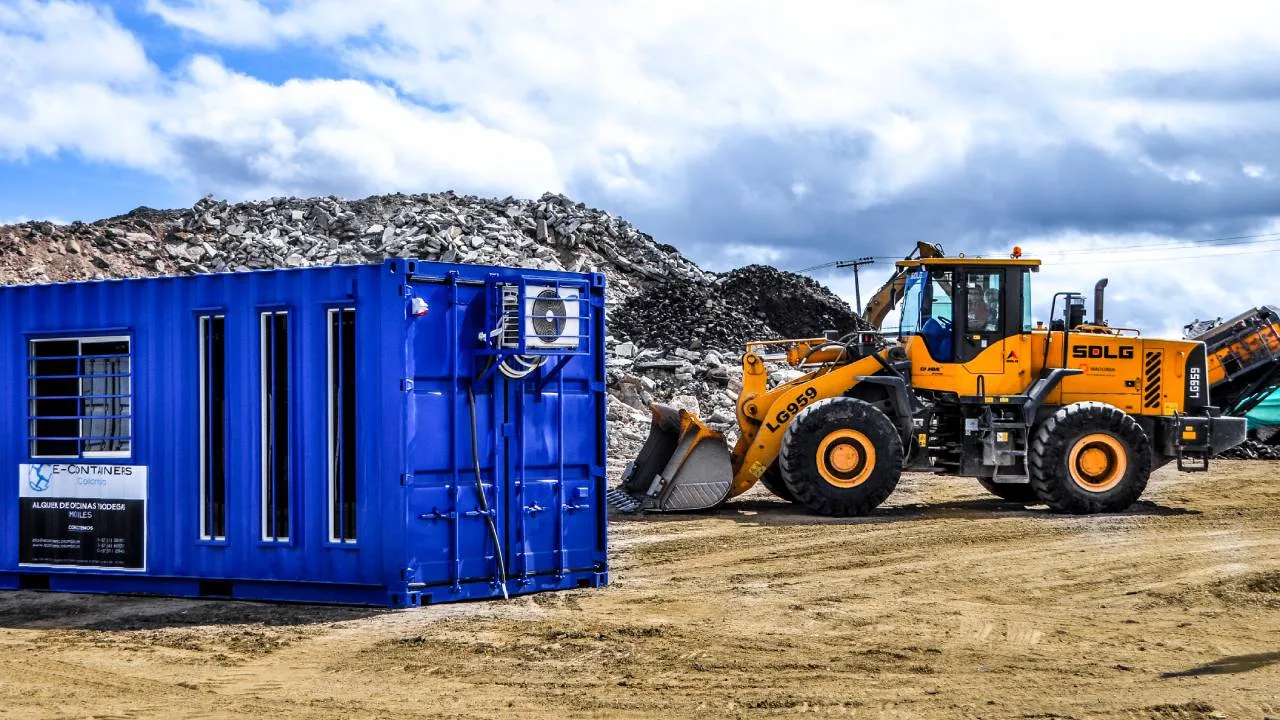
A shipping container is basically made of Corten steel in the walls, roof, doors and frame; marine plywood in the floor, resting on steel cross members; and EPDM rubber seals on the doors, which are what guarantee weathertightness. To that add the paint and anti-corrosion treatment, the locking hardware and the four cast steel corner castings by which the unit is lifted and stacked. This guide separates two things that are often confused: what a container is made of and what types of container exist.
What is a shipping container made of?
Each material has a specific function and none can be swapped lightly. This is the composition of a standard dry container:
| Component | Material | Function | Strength reference |
|---|---|---|---|
| Side and front walls | Corrugated Corten steel | Structural enclosure and rigidity | Sheet 1.6 to 2.0 mm thick |
| Roof | Corten steel | Cover and contribution to torsional rigidity | Thickness similar to the walls |
| Frame and corner castings | Cast steel and steel profiles | Lifting, stacking and lashing on board | Bears the stacking of several loaded units |
| Floor cross members | Steel profiles | Support the wood and transfer the load to the frame | Distributes forklift weight |
| Floor | Marine plywood of tropical hardwoods or bamboo | Cargo surface and forklift traffic | Panels about 28 mm (1.1 in) thick |
| Door seals | EPDM rubber | Water- and windtightness | Resists UV, ozone and temperature cycles |
| Locking hardware and bars | Galvanized or stainless steel | Closing, sealing and security | House the ISO 17712 seal |
| Finish | Anti-corrosion primer and marine paint | Additional barrier against sea spray | Multi-layer system applied at the factory |
Why Corten steel and not ordinary steel?
Corten is a low-alloy steel to which copper, chromium, nickel and phosphorus are added. That alloy does something counterintuitive: rust protects it instead of destroying it. When exposed to alternating cycles of wetting and drying, the surface develops a very dense, compact layer of oxides called a patina, which acts as a physical barrier and stops water and oxygen from penetrating further into the metal.
In ordinary steel, corrosion is progressive and eats the sheet inward. In Corten, the patina stabilizes and halts the advance. That patina takes two to five years to form fully under normal exposure conditions. Its two best-known standardized variants are ASTM A242 (COR-TEN A) and ASTM A588 (COR-TEN B), the latter with higher mechanical strength and the usual choice for containers and transport equipment.
The corrugation of the walls is not decorative: the folds increase the rigidity of the sheet without adding weight, which is why an empty container weighs just over two tons and still bears several loaded units stacked on top. On that basis, a well-maintained container can stay in service for decades, which explains why it is reused so much in modular construction.
The floor: treated plywood
The floor is the part that suffers most. It takes the point load of forklift wheels, scraping, dragging and moisture. That is why solid wood is not used but marine plywood, made of layers of tropical hardwood glued under pressure, in panels roughly 28 mm (1.1 in) thick. Some manufacturers now use laminated bamboo, which performs similarly and comes from a more renewable resource.
That plywood is treated at the factory with insecticides and fungicides to prevent pests and rot during years of marine exposure. This matters if you are going to reuse the container as a home or office: on older units it is advisable to seal or replace the original floor before living in it, because the active ingredients used in past decades are now restricted in several markets. A floor that is kept dry lasts between 15 and 25 years.
Here is a frequent confusion worth clearing up. The ISPM 15 standard governs the phytosanitary treatment of wood packaging used in international trade: pallets, crates, reels and dunnage. It requires debarking plus heat treatment or fumigation, and a visible mark with the IPPC symbol, the country code, the producer code and the treatment abbreviation (HT, DH or MB). It does not apply to the container floor, because plywood panels are exempt: the manufacturing process with heat, pressure and adhesives already eliminates pests. What does have to comply with ISPM 15 are the wooden pallets you put inside the container.
Seals, paint and anti-corrosion treatment
A "wind and water tight" container is so thanks to three elements almost nobody looks at when buying:
- EPDM rubber seals. They line the four doors and are the real guarantors of weathertightness. They withstand ultraviolet radiation, ozone and the temperature swings of a transoceanic crossing. When they harden or crack, the container starts to leak even if the steel is flawless. They are easy to replace.
- Paint system. A zinc-rich anti-corrosion primer is applied over the steel, followed by marine-grade finish coats. Paint is not just cosmetic: it is the first barrier, which is why a deep scratch that reaches the metal should be touched up before localized corrosion advances.
- Vents. Dry containers have passive ventilation grilles that equalize pressure and reduce internal condensation, the phenomenon known as container rain.
What types of container exist?
Once the materials are clear, the other question is what configurations exist. The types differ by geometry and equipment, not by base material, which remains steel in almost every case.
| Type | Feature | Typical cargo |
|---|---|---|
| Dry Van | Closed, weathertight box. The most used in the world | Palletized general cargo |
| High Cube | Same as the Dry Van but about 30 cm (1 ft) taller | Bulky, light cargo |
| Reefer | Insulated walls and its own cooling unit; requires an electrical connection | Food, flowers, pharmaceuticals |
| Open Top | No rigid roof; closed with a tarpaulin and bows | Machinery loaded by crane from above |
| Flat Rack | Platform with end walls, no sides or roof | Oversized cargo, vehicles, structures |
| Open Side | Doors along the full side | Long pieces or hard-to-access cargo |
| Tank | Tank inside a frame with ISO dimensions | Liquids, chemicals, gases |
| Bulk | Top loading hatches and discharge openings | Grain, sugar, resins |
If you need controlled cold, see our refrigerated containers. To see the units available, browse the online shop or contact us.
Frequently asked questions
What steel is a container made of?
Corten steel, a low-alloy steel with copper, chromium, nickel and phosphorus. Its best-known standardized variants are ASTM A242 and ASTM A588. It forms a compact rust patina that halts corrosion instead of letting it advance.
How thick are a container's walls?
The corrugated sheet of the walls and roof typically measures between 1.6 and 2.0 mm. The corrugation adds rigidity without adding weight, so the structure withstands the stacking of several loaded units.
Is a container floor toxic?
The plywood is treated at the factory with insecticides and fungicides to resist pests and moisture for years. If you are going to use the container as a home or office, the recommendation is to seal the original floor or replace it, especially on older units.
How long does a shipping container last?
In active ocean service, shipping lines usually rotate them out at around ten to fifteen years. Out of the fleet, with paint and seal maintenance, a container can keep serving storage or construction purposes for decades.
Does the container floor have to comply with ISPM 15?
No. Plywood panels are exempt because their manufacture with heat, pressure and adhesives eliminates pests. ISPM 15 applies to the wood packaging that goes inside the container: pallets, crates and dunnage.
 Corten steel containers with sound floors and seals. See our shipping containers.