Is a Shipping Container Worth Investing In?

It depends on the use you have in mind. A shipping container is a physical, durable asset that is easy to resell, but it does not produce income on its own: the return comes from renting it out, from using it to stop paying for warehouse space or from converting it into a space that generates business. Without a defined use, it is an expense that rusts. This article describes objective factors and risks; it is not investment advice and it promises no return.
Which uses generate income with a container
Before looking at prices, decide what the unit is going to do. Each path has a different demand on capital, operation and time.
| Use | Where the income comes from | What it requires |
|---|---|---|
| Renting to third parties | Monthly rent from construction sites, events, companies with inventory peaks | Your own yard, transport, maintenance, contracts and collections |
| Your own storage | No income: it avoids renting a warehouse | Land with truck access and room to maneuver |
| Conversion for a business | The profit of the business: shop, office, café, workshop | Investment in the conversion, utilities and local permits |
| Buy, convert and resell | Margin on the transformation | Workshop, working capital and the ability to sell the result |
| Cold storage with a reefer | Higher rate per refrigerated cubic meter | Three-phase power supply, specialized maintenance and high electricity consumption |
If the plan is to live or work inside the unit, the project stops being a purchase and becomes a construction job, with its own permits and engineering.
What recurring costs it has
The most common mistake is to calculate only the purchase price. A container costs money every month, whether or not it has a tenant:
- Maintenance and paint: rust removal, coating, replacement of door gaskets and floor repairs. In coastal areas the cycle is shorter.
- Transport and lifting: every move requires a truck and a crane or a forklift of sufficient capacity. Moving the unit twice a year can cost more than maintenance.
- Land or yard: rent or the opportunity cost of the lot, plus fencing, lighting and security.
- Insurance: against theft, fire and damage. If you rent it out, you have to define who is liable for the contents.
- Energy: only applies to refrigerated units, but it is the dominant cost in that case.
- Administration: invoicing, contracts, collections and your own time coordinating deliveries.
- Vacancy: months without a tenant still generate costs.
Real risks
- Corrosion: humidity and salt air in coastal regions attack welds and the underside. A unit resting directly on the ground deteriorates much faster.
- Theft and vandalism: a container on an unguarded lot is a target, both for its contents and for the steel.
- Vacancy and local competition: the rental market is regional. In cities with plenty of supply, finding a tenant takes longer than expected.
- Price cycle: the value of a used container moves with ocean freight rates, the price of steel and the imbalance of equipment between regions. It can go up and it can also fall.
- Permits: if the unit is used as a building, the local authority may require a permit and compliance with zoning rules. Find out before buying, not after.
- Investment schemes with guaranteed buy-back: buying containers from a company that promises to rent them out and buy them back at a fixed return is not the same as buying an asset. The case of P&R in Germany, which filed for insolvency in March 2018 leaving tens of thousands of investors affected and with a real fleet far smaller than the one sold on paper, is the reference warning. If you cannot see, identify and move your unit, in practice it is not yours.
How to buy well
- Define the use first: the use determines the size, the type and the grade, not the other way round.
- Choose the commercial grade: one-trip for visible projects or export; cargo worthy if it is going to travel; wind and water tight for static storage.
- Inspect before paying: the floor from inside with the doors closed to spot light coming in, the roof from above looking for pooled water, corner castings and bottom rails, gaskets and door operation, and smells that give away previous cargo.
- Verify the unit's identity: CSC plate with month and year of manufacture and next examination date or ACEP number, and the ISO 6346 identification code painted on the doors and sides.
- Demand documents: an invoice in your name, proof of ownership from the seller and, if the unit is imported and stays in the country as an asset, proof of its customs clearance.
- Close the logistics in the same deal: who transports, who unloads, what it rests on and who is liable if the site does not allow the maneuver.
To compare the sizes, types and grades available, browse our online shop or ask for a quote with the use you have in mind.
Taxes: what to review with your accountant
There are no shortcuts here and rates change, so the right thing is to list the concepts and take them to a professional. The ones that almost always come up are these:
- Sales tax on the purchase: whether you can deduct or recover it depends on your tax status and the use of the asset.
- Treatment as a fixed asset: the container goes on the balance sheet and is depreciated. Maximum tax depreciation rates are set by tax law; the buyer does not choose them freely.
- Rental income: rent is taxable income and may be subject to withholding depending on who pays.
- Local business taxes: if renting becomes a regular activity, it may be taxable in the jurisdiction where it is carried out.
- Invoicing: proper invoices are required to support the income.
- Customs: containers that enter a country as cargo units receive special customs treatment while they serve international transport. When they enter as goods, that is, to stay in the country as an asset, they must be imported under the corresponding regime with payment of duties. In Colombia this is governed by Decree 1165 of 2019. Buying a unit without that paperwork transfers the problem to the buyer.
So, is it worth it?
It is worth it when there is a concrete need behind it: a company that stops paying for a warehouse, a business that needs an operating space fast, a yard that already exists and can rent out units. In those cases the container solves a problem, and the return is measured against the cost it avoids or the business it enables. It is not worth buying one expecting it to appreciate on its own, nor entering schemes that promise fixed income without you being able to identify your unit. Before deciding, do the full exercise: purchase cost, transport, conversion, land, maintenance and realistic months of use, and go over it with your accountant.
Frequently asked questions
How much does a shipping container cost?
It depends on the size, the type, the commercial grade, the delivery city and availability at the time, which varies with trade flows. That is why prices are quoted case by case; you can see current prices in our online shop.
Is it better to buy or rent?
Renting makes sense when the need is temporary or the timeframe is uncertain, because it avoids the cost of maintenance, transport and resale. Buying makes sense when the use is permanent or when the unit is going to be modified for your own project.
Do I need a permit to put a container on my lot?
If it is used as mobile storage, generally not. If it becomes a living space or a space open to the public, it falls under zoning and land-use rules. Check with your local planning office before buying.
How easy is it to resell a container?
There is an active secondary market, but liquidity is not immediate: condition, location and the point in the price cycle all matter. And the resale carries the cost of moving the unit to the buyer.
Is a used container as good as a new one?
For static storage, a used unit in good condition does the job perfectly and costs less. For export, a valid certification is needed, and for visible projects a one-trip unit is usually preferred for its finish and uniformity.
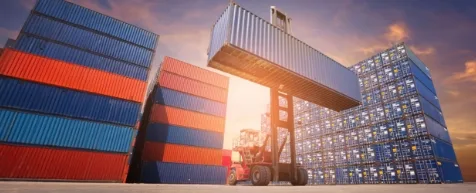 Compare sizes, grades and prices of containers in stock in our online shop.