Buy or Lease a Shipping Container? How to Make the Right Call

When efficiency and flexibility decide competitiveness, choosing between buying and leasing a container becomes a strategic decision for companies in foreign trade, logistics, construction and industry. Beyond the upfront cost, the length of the project, how often the unit will be used and the availability of equipment can have a big impact on the profitability of the operation.
When buying a container makes sense
Buying is usually the best option for companies that need a container permanently or on a recurring basis. It gives full control over the asset, the freedom to adapt it to specific needs and a better return over the long term when the unit is part of daily operations.
Besides carrying cargo, owned containers are widely used as on-site storage, warehouses and secure lock-ups for tools and materials. If you are leaning toward buying, our guide to
When leasing makes sense
Leasing is an efficient solution for temporary projects, seasonal operations or companies that want to protect their cash flow without a significant upfront investment. It also gives quick access to equipment in different locations, a real advantage for companies with international operations.
Econtainers offers three types of container lease, available to customers in every market, including the United States:
| Lease type | Term | Main benefit |
|---|---|---|
| Long-term lease | 3 to 8 years | The most competitive rates, for continuous operations and carrier or operator fleets |
| Short-term lease | 1 month to 3 years | Flexibility for specific projects, without a long-term commitment |
| One-way lease | A single trip | Lower cost: the container is used for one voyage, with no charge for returning it empty |
Price is not the only factor
The choice should not be based on price alone. Industry specialists recommend weighing:
- Project length: the longer and more stable the need, the more buying pays off.
- Total cost of ownership: purchase price, delivery, maintenance and resale value versus the total lease payments.
- Maintenance: who inspects and repairs the unit during its use.
- Inventory availability: whether the supplier actually has the equipment where and when you need it.
- Geographic coverage: whether the supplier can serve you in every market where you operate.
"Companies today look for solutions that adapt to the pace of their operations. There is no single answer: the decision to buy or lease depends on the logistics strategy, the time horizon of the project and how much flexibility each customer needs."
— Andrés Valencia, CEO of Econtainers Global
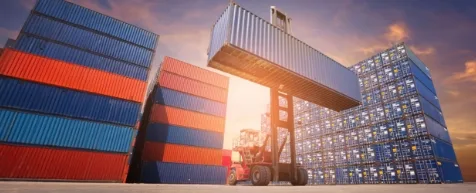 Not sure whether to buy or lease? Tell us about your project and we will quote both options.
 Advice first, decision second
According to Econtainers Global, more and more companies are looking for flexible solutions that let them optimize resources without putting the continuity of their operations at risk. That is why advice before the decision has become essential: the right option depends on how long the operation lasts, the available budget and the specific needs of each customer.
Immediate availability also matters. Where demand can change quickly, a supplier with inventory in different regions keeps operations running and reduces waiting times, especially for industrial, logistics and infrastructure projects.
A strategic decision
As supply chains keep evolving, choosing between buying and leasing a container should be treated as a strategic decision with a direct impact on productivity, costs and responsiveness. Evaluating operational needs, the project horizon and the business model leads to a better decision and a higher return on investment.
Ready to decide? See dry containers and reefer containers, check live prices in the online shop, or ask for a lease quote. You may also like our
This article was first published in Spanish by Mundo Marítimo on August 3, 2026.