The New Map of Global Trade and the Strategic Role of Containers

With supply chains being reconfigured, global trade is going through a deep transformation. Nearshoring, geopolitical tensions, port congestion and the need for more resilient logistics have produced a new trade map, in which efficiency and adaptability have become critical assets.
A more vulnerable, more regional trade system
In recent years, disruptions on key routes, including the Suez Canal and the Panama Canal, have exposed the vulnerability of the international logistics system. On top of that, trade is becoming more regional, driven by markets that want to reduce risk and shorten distances in their supply chains. Read more in the new geography of maritime trade.
The container, backbone of maritime trade
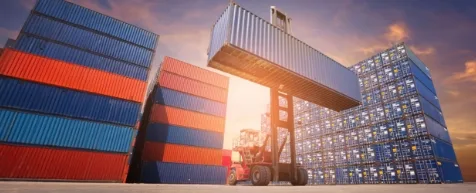
In this scenario, the container, the backbone of maritime trade, has become even more relevant. More than 80% of world trade by volume moves by sea, and much of that flow depends directly on the availability, location and efficient management of equipment. Distributing containers well is no longer just an operational matter: it is a competitive advantage.
How Econtainers Global works
This is where companies with a global footprint play a strategic role. Econtainers Global, with operations in more than 27 countries across North America, Central America, the Caribbean, South America, Europe and Asia, is an international trading and leasing company specialized in buying, selling and leasing new and used containers. Its model combines:
- Sourcing from surplus markets, where equipment is available at better prices.
- Direct production programs with container factories, mainly in China.
- Global repositioning of equipment toward high-demand markets.
The company works directly with major shipping lines, international suppliers and leading manufacturers, which allows it to handle high-volume transactions and keep inventory turning quickly. Through a strong B2B network, it serves container distributors, logistics companies, modular construction firms, freight forwarders and industrial operators.
 See live container inventory by location, with prices unit by unit.
 Leasing built for how trade moves
Buying new containers directly from Asian factories and running both short- and long-term leases, including one-way leases, lets Econtainers Global deploy equipment efficiently in high-demand markets. This approach optimizes logistics costs and improves container availability in strategic regions.
| Lease type | Term | Main benefit |
|---|---|---|
| Long-term lease | 3 to 8 years | The most competitive rates, for continuous operations and carrier or operator fleets |
| Short-term lease | 1 month to 3 years | Flexibility for specific projects, without a long-term commitment |
| One-way lease | A single trip | Lower cost: the container is used for one voyage, with no charge for returning it empty |
Market intelligence as an advantage
When information and anticipation are decisive, market intelligence and geographic diversification become competitive advantages. Econtainers Global has built expertise in international logistics and market arbitrage, which lets it spot opportunities and respond quickly to changes in global trade. Regions such as Latin America are gaining importance as logistics hubs, driven by growing intra-regional trade and the relocation of industry.
What comes next
The container industry will face challenges in digitalization, sustainability and route optimization, but also a window of opportunity for companies that combine technology, global coverage and strategic vision.
In this new logistics order, the container is no longer just a means of transport: it is a central axis of competitiveness in international trade. Global players such as Econtainers Global are positioning themselves as strategic partners in building more resilient, efficient and connected supply chains worldwide.
Looking for equipment or a lease? See dry containers and reefer containers, or contact our team.
This article was first published in Spanish by Mundo Marítimo on May 6, 2026.