Shipping a Container from China to Colombia: Transit Times and Costs
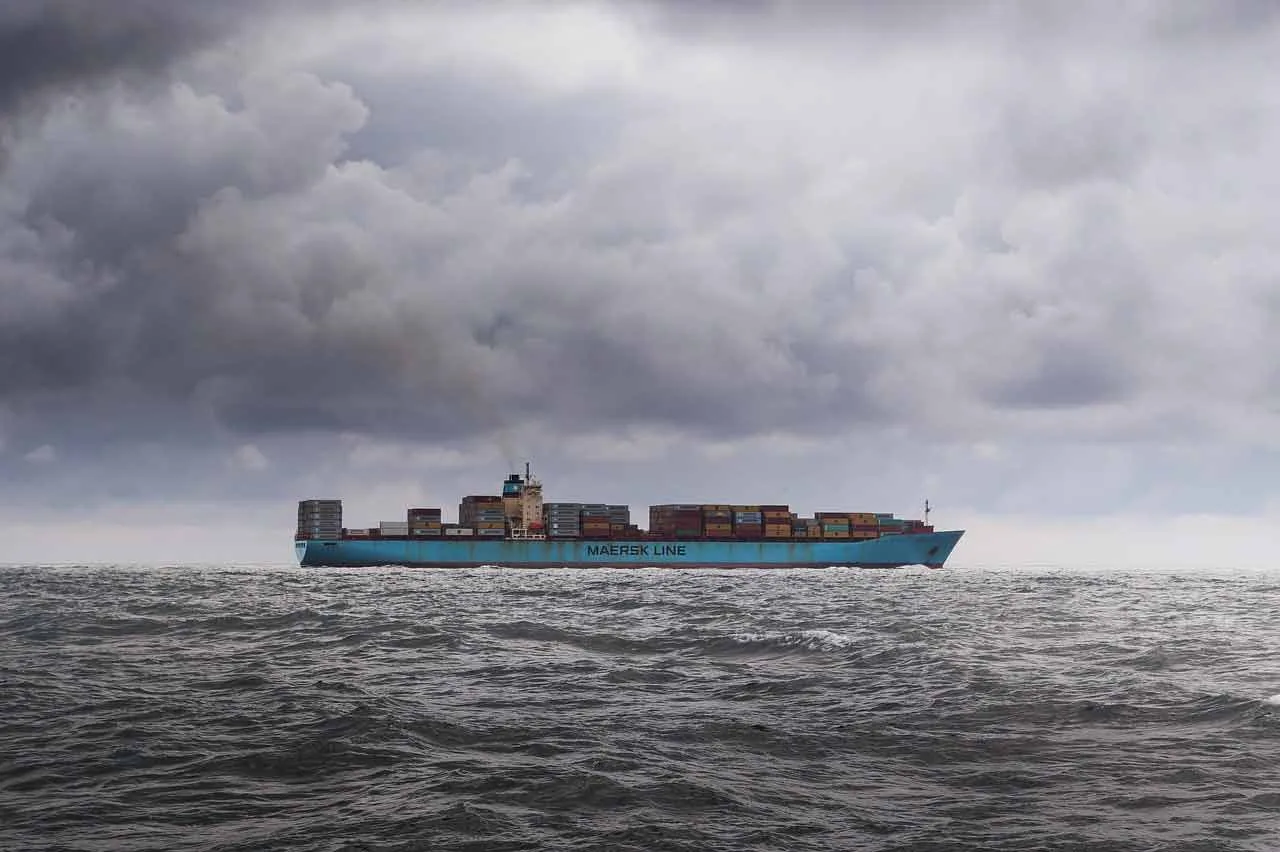
A shipping container from China to Colombia normally takes between 30 and 45 days of port-to-port transit. The exact figure depends on three factors: which Chinese port it sails from, whether the service is direct or involves transshipment, and whether the cargo enters through the Pacific (Buenaventura) or the Caribbean (Cartagena, Santa Marta or Barranquilla). On top of that transit you have to add consolidation and dispatch time at origin and customs clearance with the DIAN, Colombia's customs authority, once the cargo arrives.
How long does a container take from China to Colombia?
China is not a single point of departure. A container leaving Shenzhen and another leaving Dalian can be a good week apart in transit time, even if they arrive at the same Colombian terminal. These are the reference ranges shipping lines quote on the transpacific route to Colombia:
| Port of origin | Region of China | Estimated transit to Colombia |
|---|---|---|
| Shenzhen, Yantian, Guangzhou | South | 30 to 40 days |
| Xiamen, Fuzhou | Southeast | 32 to 42 days |
| Shanghai, Ningbo | East coast | 35 to 45 days |
| Qingdao, Tianjin, Dalian | North | 38 to 48 days |
These are indicative ranges, not commitments. The only figure you can rely on to plan your inventory is the actual schedule of the service you book, with its ETD and ETA. Ask for it in writing before confirming the booking.
Why does transit time vary so much?
Four variables explain almost all of the difference between a 30-day shipment and a 48-day one:
- Direct service or transshipment. A direct service avoids waiting at an intermediate port. A transshipment in Panama, Manzanillo or Kingston usually adds 5 to 10 days, because the cargo has to wait for the connecting vessel.
- Destination coast. Buenaventura is on the Pacific and is geographically the shortest entry point from Asia. Caribbean ports force the vessel to cross the Panama Canal or operate through a transshipment hub, which adds days.
- Season. The weeks before Chinese New Year and year-end demand peaks fill up vessel space and terminal appointments. In high season the wait to get a slot gets longer, not just the voyage.
- Port congestion. Berthing times, crane availability and strikes or road closures at the terminal affect when your container is actually available for pickup.
Which Colombian ports receive cargo from China?
Colombia has two major gateways for containerized cargo and several complementary alternatives. The Cartagena port area handles more than six out of every ten TEU moved in the country, followed by Buenaventura. The choice should not be made only on proximity to China, but on where your warehouse is and how much inland trucking from the port costs.
| Port | Coast | Profile | Best inland destination |
|---|---|---|---|
| Cartagena (SPRC and Contecar) | Caribbean | The country's main container terminal and a regional transshipment hub; receives post-Panamax vessels | Caribbean coast, Bogotá, Santander region |
| Buenaventura | Pacific | Natural gateway from Asia, with the shortest crossing and no Canal transit | Valle del Cauca, coffee region, Bogotá |
| Santa Marta | Caribbean | Deep natural draft, good bulk and container operation | Magdalena, Cesar, interior via Bucaramanga |
| Barranquilla | Caribbean | River-sea port at the mouth of the Magdalena; very versatile for mixed cargo | Atlántico and the Magdalena river corridor |
The typical decision in Colombia goes like this: if your operation is in the southwest, Buenaventura saves you days at sea and inland freight. If it is on the coast, or you move high volumes to Bogotá on a weekly basis, Cartagena usually offers more service options and better connections.
Is a 20-foot or a 40-foot container the better choice?
Transit time is identical: they travel on the same vessel. The difference is in the volume you can move and the cost per cubic meter shipped.
| Item | 20ft standard | 40ft standard | 40ft High Cube |
|---|---|---|---|
| External length | 6.058 m (19' 10") | 12.192 m (40') | 12.192 m (40') |
| External height | 2.591 m (8' 6") | 2.591 m (8' 6") | 2.896 m (9' 6") |
| Approximate internal volume | 33 m³ (1,165 cu ft) | 68 m³ (2,400 cu ft) | 76 m³ (2,685 cu ft) |
| Usual maximum gross mass | 30,480 kg (67,200 lb) | 30,480 kg (67,200 lb) | 30,480 kg (67,200 lb) |
| Transit from China | Same | Same | Same |
A 40ft offers a little more than twice the volume of a 20ft, but it does not cost twice the freight: the cost per cubic meter is almost always lower. The rule of thumb is simple. If your cargo is bulky and light (furniture, plastics, textiles, packaging), the 40ft or the High Cube pays off. If your cargo is dense and heavy (hardware, ceramics, metal spare parts, tiles), you will hit the weight limit long before the volume limit, and the 20ft is the right choice.
What makes up the cost of importing from China?
Here is the most expensive mistake a first-time importer makes: quoting only the ocean freight and budgeting on that figure. Freight is just one line item. What's more, freight rates move week to week depending on vessel space, demand and seasonal surcharges, so any price published in an article will be out of date before you read it. What you can know in advance is the structure of the cost:
| Item | Who charges it | What it depends on |
|---|---|---|
| Origin charges and transport to the Chinese port | Supplier or agent in China | The agreed incoterm (EXW, FOB, CIF) and the factory-to-port distance |
| International ocean freight | Shipping line or freight forwarder | Container type and size, route, season and space availability |
| Freight surcharges | Shipping line | Fuel, congestion, peak season, canal transit surcharges |
| THC and port charges at destination | Marine terminal | Port of arrival, container type and yard services |
| Duties and VAT | DIAN (Colombian customs) | Tariff classification of the goods and declared customs value |
| Customs brokerage | Customs broker | Complexity of the clearance and number of tariff lines |
| Inland transport and container return | Trucking company | Port-to-warehouse distance, vehicle type and loading times |
| Storage, demurrage and detention | Terminal and shipping line | Days the cargo stays at the port beyond the free period |
That last line is the one that surprises people most. If the paperwork arrives incomplete and the container sits in the yard beyond the free period, demurrage accrues by the day and can exceed whatever you saved negotiating the freight. To get a real figure for your case, with your goods and your port, contact us.
What documents do you need to import from China?
These are the four documents that support the entire operation, and they must be consistent with each other. A discrepancy in quantities or descriptions between the packing list and the bill of lading is enough to hold up clearance:
- Bill of Lading (BL). Issued by the shipping line. It certifies the goods were received on board and acts as the document of title to the cargo: without it, the container cannot be released.
- Commercial invoice. Must identify the seller, the buyer, the description of the goods, payment terms, incoterm and country of origin. It is the basis of the customs value.
- Packing list. Details packages, quantities, weights and dimensions. It is what the authority checks if the container is selected for physical inspection.
- Certificate of origin. Determines whether a tariff preference applies. Without it, the goods pay the general rate even if the country of origin has a trade agreement in force.
Depending on the goods, registrations or approvals may also be required from agencies such as the ICA, the Invima or the Ministry of Commerce, and the incoterm must be correctly reflected across all the paperwork.
How is cargo cleared through Colombian customs?
Customs clearance, known locally as nacionalización, is the process that turns foreign goods into goods in free circulation in Colombia. The steps, in order:
- Register as an importer. The tax registration (RUT) must have the import activity enabled before the cargo arrives.
- Customs broker. For imports with an FOB value of 1,000 dollars or more, you must act through a licensed customs broker, appointed by a mandate.
- Import declaration. Filed with the DIAN through the customs IT system, with the calculation of duties and VAT according to the tariff line.
- Selectivity. The DIAN assigns a green channel (automatic release), yellow (documentary review) or red (physical inspection of the container).
- Release. Once release is authorized, you can pick up the cargo from the terminal and schedule transport to your warehouse.
Every day the cargo waits at the port for a missing document costs money. That is why it pays to have the complete file ready before arrival, not after. In Colombia, Econtainers also offers international logistics services to accompany you along the whole chain.
Frequently asked questions
How much does it cost to bring a container from China to Colombia?
There is no fixed rate: ocean freight is adjusted weekly according to the route, the container type, the season and space availability on vessels. Any published figure is out of date within days. The right approach is to request a current quote that includes freight, surcharges, port charges, brokerage and inland transport.
Is it faster through Buenaventura or through Cartagena?
In pure ocean transit, Buenaventura is usually shorter because it avoids the Panama Canal crossing. However, Cartagena concentrates more services and more sailings, so it sometimes makes up the difference. The final decision should include the cost of inland transport to your warehouse.
What happens if my container stays at the port?
After the free period granted by the shipping line and the terminal, demurrage and storage charges start running, billed per day and per container. The most common cause is incomplete or inconsistent paperwork. Having the BL, the invoice, the packing list and the certificate of origin ready before arrival is the best way to avoid it.
Can I import without a customs broker?
Only below the 1,000-dollar FOB threshold or through special regimes such as postal traffic. For a full container import from China, acting through a customs broker is mandatory and is formalized with a mandate.
How long does customs clearance take?
With complete paperwork and a green channel, it can be resolved within a few business days of arrival. A red channel with physical inspection lengthens the process, and a documentary error can stretch it out for weeks. Clearance time is planned separately from ocean transit, never inside it.