PTI for Refrigerated Containers: The Complete Guide

The PTI (Pre-Trip Inspection) is the functional test carried out on an empty refrigerated container before it is released for loading. The unit's controller runs an automatic sequence that checks the compressor, fans, defrost heaters, temperature probes and alarms, and records the result. Without a valid PTI, the shipping line will not release the equipment.
What the PTI is and what it checks
The PTI is not an eyeball check: it is a programmed routine inside the controller, the central memory of the cooling unit. When it is launched, the equipment tests itself and compares the results against factory parameters. In essence, it evaluates:
- Cooling and heating capacity: whether the unit reaches and holds the chilled and frozen test set points.
- Compressor and pressures: start-up, refrigerant level and high- and low-pressure behavior.
- Evaporator and condenser fans: rotation, direction and current draw.
- Defrost cycle: activation of the heaters and drainage.
- Probes and sensors: consistency between supply and return readings.
- Active alarms: the display must finish with none lit.
What the PTI does not cover is left to the technical team: piping, insulation, filter driers, door gaskets, the condition of the T-floor and the sight glass that shows refrigerant and moisture levels. If you are interested in how the equipment works inside, we explain it in
PTI or visual inspection: what is the difference?
They are often confused, and they are complementary. One does not replace the other.
| PTI | Visual and structural inspection | |
|---|---|---|
| What it evaluates | Operation of the cooling unit | Physical condition of the container and the machine |
| How it is done | Automatic routine with the unit powered | Manual check, largely with the unit unpowered |
| Who decides | The controller produces the result, the technician validates it | The technician or the inspector |
| Detects | Compressor, probe, fan and defrost faults | Corrosion, dents, worn gaskets, damaged floor, odors |
| Duration | One to several hours depending on the mode | Minutes |
Before accepting a unit, it is best to do both. The step-by-step physical check is in
How a PTI is done, step by step
- Empty, clean container: no cargo, with grilles and drains clear so air circulates without obstacles.
- Cold check, unpowered: verify that no component has water in it, especially the plug or connection point, to avoid short circuits.
- Electrical insulation measurement: on motors and contactors, still with the unit unpowered.
- Power-up and initial check: pressures, refrigerant level and no alarms on the display.
- Controller configuration check: date, time and data codes. If they are set wrong, the report will carry the wrong date and the record loses validity with the shipping line.
- Running the PTI: launch the routine and let it run without opening the doors. When it finishes, the word done appears on the display.
- Technician validation: the controller acts in a programmed, methodical way with no judgment of its own, so the result is always confirmed by a person.
A container that has sat in the sun for days can exceed 40 °C (104 °F) inside. In that case a pre-cooling is done with the doors closed before loading, to remove the residual heat. That is different from the PTI and is done afterwards.
How long a PTI takes and how often it is done
Controllers offer several modes. The short ones check specific functions quickly; the long or full mode is the one shipping lines require for export and can take from an hour and a half to several hours, depending on the manufacturer and the condition of the equipment. The full mode is the one that gives a reliable check.
As for frequency, the practical rule is this:
- Before every stuffing of refrigerated cargo, with the container empty.
- Every time the equipment is handed over to a customer for loading outside the terminal.
- When the previous PTI expires: validity depends on the shipping line and usually sits between 30 and 180 days from the report date. If it has expired, the unit is not released until it is repeated.
- After any repair to the cooling unit.
In fixed storage, where the container does not travel, the PTI is replaced by a preventive maintenance plan with a defined frequency.
Who performs the PTI and what document it produces
It is carried out by technical staff certified on cooling units, almost always at the depot or terminal where the equipment sits, or in the yard of the supplier that rents it. It is not a task for the shipper or the driver.
The result is delivered in three forms, and it is worth asking for all three:
- PTI report: a printout or file downloaded from the controller with date, time, container number, tests run and result.
- Decal or label stuck on the unit with the PTI date, which is what the terminal checks on receipt.
- Record in the unit's memory: it stays in the datalogger and can be downloaded later if there is a claim.
Keep that report. In a cargo damage claim, it is the proof that the equipment left operating within parameters.
What to do if the PTI fails
A failed PTI does not always mean a useless unit. Usually it produces an alarm code that points to a specific component: a miscalibrated probe, a jammed fan, low refrigerant charge. It is repaired, the PTI is repeated and the result is documented. What must never be done is load sensitive goods with active alarms or an expired PTI: if the cargo is lost, responsibility falls on whoever decided to stuff it.
If you need a unit with a valid PTI for export or for cold storage, contact us and we will tell you availability and conditions.
Frequently asked questions
Is the PTI done with the container empty?
Yes, always. With cargo inside, the routine cannot take the box to the test set points or run the defrost cycle, and the result would not be valid.
How long is a PTI valid?
Each shipping line defines it, and it is usually between 30 and 180 days from the report date. Always check the decal on the unit before scheduling loading, because an expired PTI blocks the release.
Are PTI and pre-cooling the same thing?
No. The PTI checks that the machine works; pre-cooling lowers the temperature of the already approved container just before loading. And neither of them cools the goods: the cargo must arrive at its temperature from origin.
Who pays for the PTI?
It depends on the negotiation. On shipping line equipment it is usually included in the delivery cycle; when an additional PTI is requested, off-terminal or repeated because of expiry, it is normally paid by whoever requests it. Confirm it in writing before scheduling.
Does a storage container need a PTI?
Not in the strict sense, because it is not going to travel. But it is worth running the routine periodically: it is the fastest way to detect an incipient fault before it ruins the stored product.
Technical reference: Reefer Container Pre-Trip Inspection, Shipping and Freight Resource.
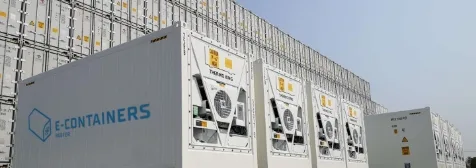 Reefers tested and ready to run. See our refrigerated containers.