Energy Efficiency in Refrigerated Containers: Sustainable Technologies and Practices

In the age of environmental awareness and operational efficiency, refrigerated containers face the challenge of keeping the cold chain without compromising sustainability. In this article we show you that there is indeed a way for these two goals to work side by side, thanks to innovation in technology and the adoption of sustainable practices that are reshaping the energy efficiency of these units.
Innovations in container refrigeration
In recent years, several strategies have been implemented to reduce negative environmental impact and contribute to cutting CO2 emissions worldwide. Part of the change is that every industry joins the cause, creating sustainable practices that support the United Nations' sustainable development goals.
In the container sector, and specifically with reefer containers, different proposals have been developed that show a commitment to transporting temperature-sensitive goods without an environmental toll. Below are some of these innovations in favor of the environment.
High-performance insulation
The efficiency of a refrigerated container starts with superior insulation. Advances in insulating materials have significantly reduced heat transfer. Polyurethane foam and expanded polystyrene panels improve the retention of internal temperatures, reducing the reliance on active cooling and therefore energy use.
Efficient refrigeration systems
The transition to more efficient refrigeration systems is tangible. Modern compressors designed to run on ammonia or CO2 have proven more efficient than their HFC-based predecessors. These systems are not only friendlier to the environment; they also offer a better energy efficiency ratio, lowering costs in the long run.
Renewable energy in refrigerated containers
Integrating renewable energy is a milestone in the evolution of these units. With solar panels installed, they can run partly on clean energy, shrinking their carbon footprint and drawing on inexhaustible energy sources.
Sustainable management practices
Remote monitoring and IoT technology
Internet of Things (IoT) technology has revolutionized the monitoring of refrigerated containers. Smart sensors deliver real-time data on temperature and humidity, allowing precise adjustments that minimize energy consumption and improve product preservation.
Predictive maintenance
A proactive approach to maintaining a refrigerated container can prevent failures and maximize energy efficiency. Through data analysis and artificial intelligence it is possible to anticipate service needs, ensuring the systems always run in optimal condition.
Optimized design and operation
Strategic planning in the design and operation of refrigerated containers plays a critical role. Optimizing transport routes, together with loading techniques that favor air circulation, can reduce the need for active cooling, which translates into more efficient energy use.
In short, refrigerated containers are essential to the global supply chain, and their energy efficiency is fundamental to a sustainable operation. With emerging technologies and management practices focused on sustainability, the industry is on its way to a more efficient and responsible future.
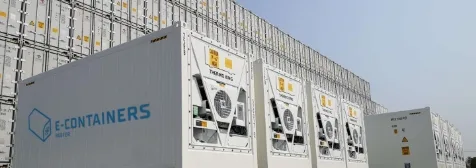 Explore our refrigerated containers and the technology behind their energy efficiency.