Products That Depend on Refrigerated Containers

Refrigerated containers, commonly known as reefers, play an essential role in the global supply chain by making sure certain products reach their destination in optimal condition. In this article we explore the features and operation of refrigerated containers, the technology behind their refrigeration and the products that depend on them. We also look at the common challenges of shipping with reefers and how they are overcome.
Refrigerated containers: features and operation
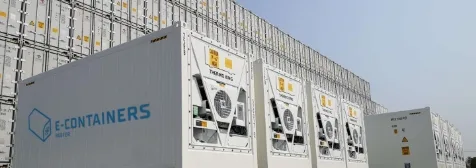
Refrigerated containers are intermodal cargo units with built-in refrigeration systems that maintain controlled temperatures. These systems are essential to preserve the freshness and integrity of heat-sensitive products during transport. Some of the key features of reefers include:
- Advanced refrigeration systems: reefers are equipped with cooling units that hold precise, constant temperatures, from deep-frozen to controlled ambient.
- Humidity control: beyond temperature, reefers also control humidity to prevent sensitive products from drying out or suffering condensation.
- Real-time monitoring: most refrigerated containers carry real-time monitoring systems that let operators supervise and adjust temperature and humidity during transport.
- Thermal insulation: refrigerated containers are built with high-quality insulation to prevent sudden temperature changes.
Products that require refrigerated containers
1. Fresh produce
Fresh products such as fruit, vegetables, meat and fish are the most common users of refrigerated containers. Preserving freshness is essential to maintain quality and food safety during transport. Reefers let these products reach international markets in perfect condition.
2. Pharmaceuticals
Pharmaceutical products, including medicines and vaccines, often require controlled temperatures to remain effective. Refrigerated containers provide a safe, stable environment for transporting sensitive pharmaceuticals.
3. Sensitive chemicals
Some chemicals, such as photographic chemicals and those used in the electronics industry, also rely on reefers to hold specific temperatures and avoid unwanted reactions.
Challenges of shipping with reefers
Despite their benefits, shipping with reefers presents unique challenges that must be addressed to guarantee a reliable service.
Logistics issues
- Routes and planning: choosing optimal routes and planning reefer transport can be complex because of temperature constraints and the need to keep transit time to a minimum.
- Port space: coordinating space at ports for loading and unloading refrigerated containers can be a challenge, since suitable facilities are required.
Technical issues
- Maintenance: reefer refrigeration systems need regular maintenance and timely repairs to keep working at their best.
- Safety: guaranteeing product safety and container integrity is essential, including preventing refrigerant leaks and complying with safety regulations.
Overcoming the challenges
Overcoming the challenges of reefer transport requires careful planning, proper training and close collaboration between logistics operators and container manufacturers. Investing in real-time monitoring technology and regular maintenance is fundamental to keep reefers running smoothly.
At Econtainers you will find reliable, latest-generation refrigerated containers to meet the needs of your heat-sensitive products.
 Get your reefer and keep your products fresh and in good condition.