Certifications to Check Before Buying a Shipping Container
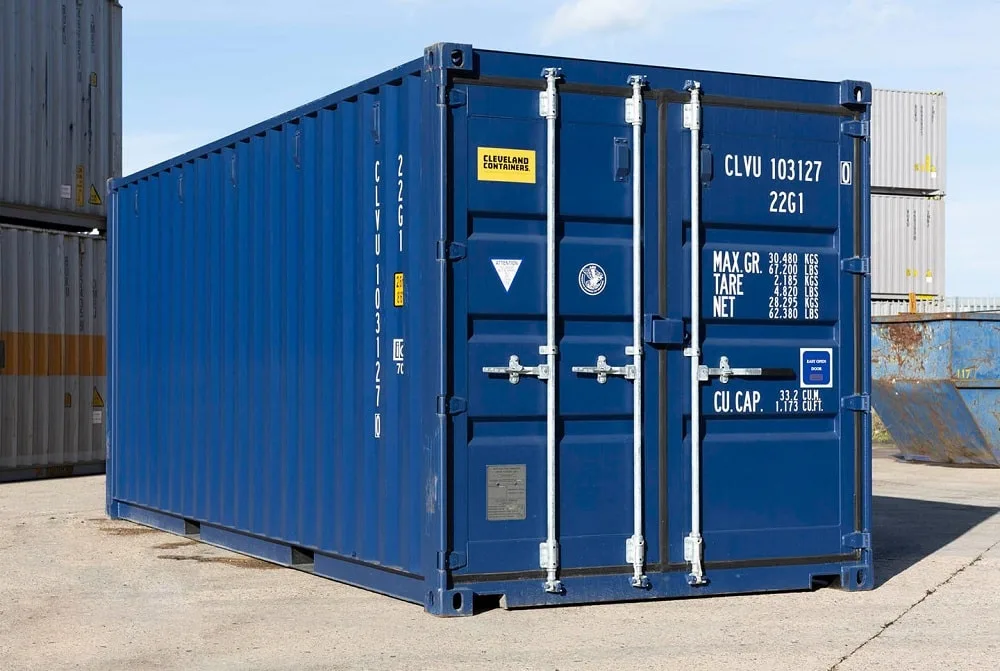
When buying a shipping container there are two separate sets of paperwork to check: the certifications of the container itself (the CSC plate, the ACEP program if it applies, and the commercial grade that describes its condition) and the documents of the transaction (commercial invoice, packing list, bill of lading, certificate of origin and import declaration). Mixing them up is the most expensive mistake: a container can have all its purchase paperwork in order and still be useless for export because its CSC plate has expired.
What certifications does a shipping container carry?
A container does not carry an "ISO certificate" as such. What it carries is a safety approval plate required by international convention, a standardized marking and, on the second-hand market, a commercial condition grade. These three things determine what you can do with the unit.
The CSC plate: the mandatory document
The International Convention for Safe Containers (CSC), adopted in 1972 and in force since 1977 under the International Maritime Organization, requires every container used in international transport to carry a riveted metal plate, usually on the left door. Without it, the unit cannot be shipped.
That plate shows the data you should read before buying:
- Country and approval number, and date of manufacture.
- The container identification number, the same one painted on the walls.
- Maximum gross mass and tare. This is the figure that governs your operation, not what a generic table says.
- Allowable stacking load and transverse racking test value.
- Date of the next examination, or the ACEP program number.
The convention allows two inspection regimes. Under the Periodic Examination Scheme (PES), the first examination takes place before the container is five years old and then at intervals of no more than 30 months. Under an ACEP (Approved Continuous Examination Program), the owner inspects its units continuously as part of normal operation, to a safety standard no lower than the periodic one; in that case the program number must appear on the plate, often as an attached decal.
Practical rule: if the plate is illegible, torn off or the examination has expired, that container cannot be used for international transport until it is re-inspected. It may still be perfectly useful for storage or construction, but the price should reflect that.
Commercial grades: how a container's condition is classified
The market uses a condition scale that is not an ISO standard but a widely accepted commercial convention. Knowing how to read it keeps you from overpaying or buying a unit that does not serve your purpose.
| Grade | What it means | Fit for export | Recommended use |
|---|---|---|---|
| One Trip (new) | Recently manufactured; made a single loaded trip from the country of manufacture | Yes | Visible projects, offices, retail spaces |
| IICL-5 | Meets the inspection criteria of the Institute of International Container Lessors; excellent structure and minimal cosmetic damage | Yes | Leasing fleets and demanding export |
| Cargo Worthy | Structurally sound and watertight; certified for international transport with more cosmetic wear than an IICL | Yes, with a valid CSC plate | Export and import of cargo |
| Wind and Water Tight | Sealed against wind and water, but without a valid certification for shipping | No | Storage, warehousing, conversions |
| As Is | Sold in its current condition, with visible damage | No | Structure for conversion, recoverable scrap |
The key difference is between cargo worthy and wind and water tight. Neither lets water in, but only the first keeps the certification a shipping line requires to load it. If your plan is to export, ask for cargo worthy or better and check the plate. If your plan is to store or build, a WWT in good condition is usually the best value. In our online shop you can see the available units and their condition.
About IICL: the number indicates the edition of the applicable inspection criteria. IICL-5 is the fifth edition and IICL-6 the sixth, implemented in 2016 for units manufactured after that update.
The marking and the container number
Besides the plate, every container carries an eleven-character number according to ISO 6346: a three-letter owner code registered with the BIC (Bureau International des Containers et du Transport Intermodal), one equipment category letter (U for freight containers), six serial digits and a mathematically calculated check digit.
Before paying, check that the number painted on the walls matches the one on the CSC plate and on the invoice. A discrepancy is a warning sign: it may indicate a repaint or a unit with an unclear history. You can verify the owner prefix in the BIC register.
Documents of the import transaction
If, besides buying the container, you are going to import goods inside it, or bring the unit in from abroad, the second set of documents comes into play. These papers must be consistent with each other: a difference in quantities or description between two of them is enough to hold up clearance.
- Commercial invoice. Identifies seller, buyer, description, payment terms, Incoterm and origin. It is the basis for the customs value.
- Packing list. Details packages, quantities, weights and dimensions. It is what gets checked in a physical inspection.
- Bill of lading (B/L). Issued by the shipping line, it certifies that the cargo was received on board. It works as a document of title: without it the container cannot be released from the terminal.
- Certificate of origin. Certifies where the goods were manufactured and determines whether a tariff preference applies. Without it, the general rate is charged even if a trade agreement is in force.
- Import declaration. Filed with the customs authority of the destination country. In Colombia, for example, it is filed with the DIAN through the customs IT system, and imports with an FOB value of USD 1,000 or more must be handled through a licensed customs broker.
- Letter of credit. Not required by customs. It is a payment instrument that gives buyer and seller security when there is no prior trust between the parties.
Once the declaration is filed, customs assigns an inspection channel; with the release authorized you can pick up the cargo and schedule inland transport from the port to your warehouse.
What to check before closing the purchase
- Legible CSC plate, with a valid next-examination date or an ACEP number.
- Container number matching on the plate, the walls and the invoice.
- Commercial grade stated in writing on the quote, not verbally.
- Light test: close the doors from inside and look for points of light at seams, roof and corners.
- Condition of the door rubber seals and operation of the locking bars.
- Floor without sagging, holes or soft spots, and cross members without perforating corrosion.
- Surface corrosion versus perforations: the first is treated, the second is a structural repair.
If you are not sure which grade your project needs, contact us or browse the online shop for a quote.
Frequently asked questions
What certificate does a container need to export?
A valid CSC plate, required by the International Convention for Safe Containers. It must be legible, with the next-examination date not yet expired, or show the number of an approved ACEP program. Without it, the shipping line will not load the unit.
What is the difference between cargo worthy and wind and water tight?
Both are sealed against water and wind. The difference is certification: a cargo worthy container keeps its fitness for international cargo transport, while a wind and water tight one no longer has it and is meant for storage or conversions.
What does it mean for a container to be one trip?
That it was recently manufactured and made only one loaded trip from its country of manufacture to the destination market. In practice it is a practically new container, with the best cosmetic and structural condition available on the market.
How often is a container inspected?
Under the periodic scheme, the first examination takes place before five years from manufacture and then at most every 30 months. Under an ACEP program, inspection is continuous within the owner's operation, with an equivalent level of safety.
Do I need a customs broker to import a container?
It depends on the destination country. In Colombia, yes, when the FOB value of the import is USD 1,000 or more; the broker prepares and files the import declaration on your behalf under a customs mandate. Check the rules of your own customs authority.
 Every Econtainers unit is graded and inspected. See our cargo worthy, WWT and one-trip containers.