Industrial Refrigeration in Reefer Containers: Everything You Need to Know
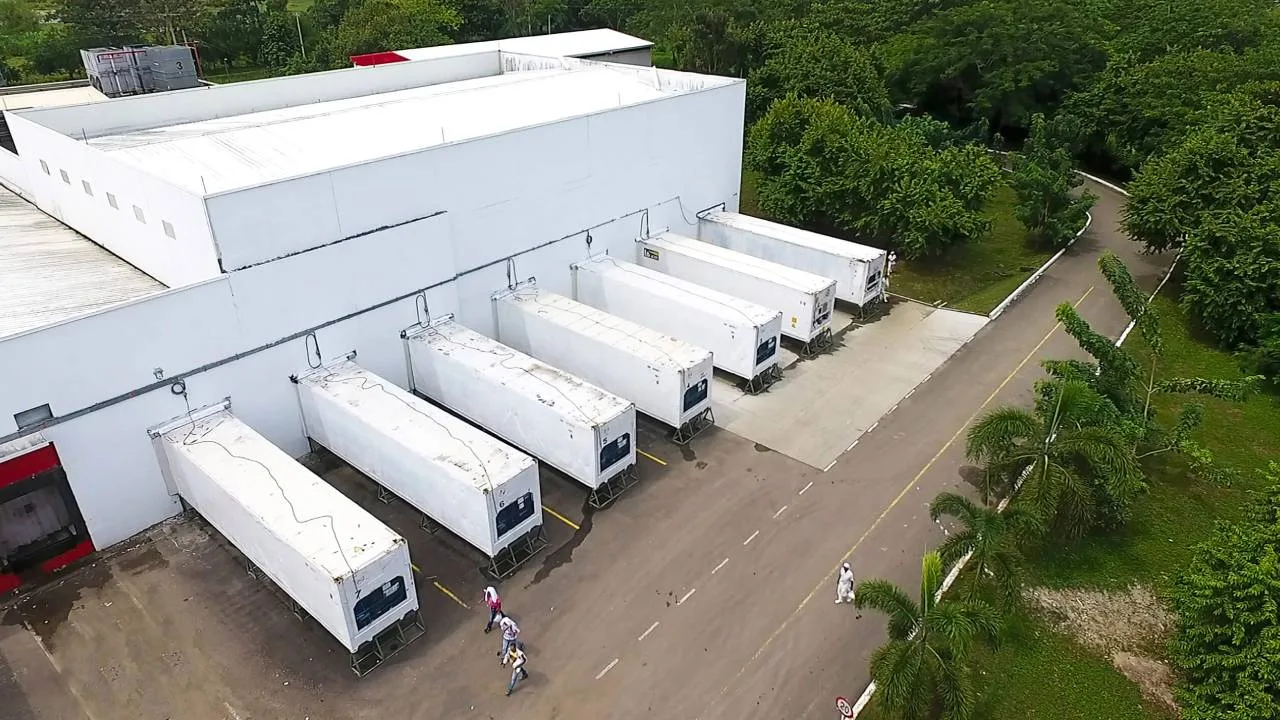
Preserving the shelf life of fresh or pharmaceutical products is a delicate and essential job. It requires thermal regulators that guarantee freshness and performance at the moment of use or consumption. Let's take a closer look.
Quality standards for industrial refrigerated transport
Transport deserves the same level of attention: it must rely only on technically capable equipment that keeps the product properly preserved and protected from temperature changes along the way. That equipment must meet the following requirements:
- Temperature: the equipment must be able to work at the temperature range the product requires.
- Stability: the equipment must be able to run for long periods and withstand any change or delay during transit without putting the product at risk.
- Capacity: the unit must have enough space for the goods to be packed correctly, avoiding damage.
Today, the equipment that guarantees correct handling and distribution of this type of product is the refrigerated container, also known as a reefer container.
What are reefer containers, how do they work and how are they built?
They are transportable units for any product that must be kept at a regulated temperature or frozen. Their purpose is to move goods over long periods without compromising quality.
Their main function is to generate and hold the required temperature throughout the journey, while giving users easy access to configure them correctly. Their system is made up of:
- Control box: the container's command center, which regulates temperature and the other systems.
- Compressor: compresses and circulates the refrigerant gas.
- Evaporator: moves or removes thermal energy.
- Condenser: dissipates the heat generated by the evaporator and the compressor.
- Power socket: connects the unit to a power source.
- Walls: covered with layers of thermal insulating material.
- Two vents: one releases cold air and the other collects warm air.
Types of reefer containers and their role in industrial refrigeration
Over the years these remarkable units have evolved to adapt to any situation or need. There are several models, all with the same function but with different purposes and builds. Here is an overview.
Standard reefer containers
These containers are usually 20ft to 40ft long, 8 ft wide and about 8.5 ft high. Because they do not generate air, they can only hold the internal temperature between -25 °C and +25 °C (-13 °F and 77 °F).

Super freezer reefer containers
This container can reach an internal temperature of -60 °C (-76 °F), ideal for delicate, temperature-sensitive cargo. It is 40 ft long.
Controlled-atmosphere containers
These are specialized units for transporting fruit and vegetables that regulate the levels of carbon dioxide and oxygen involved in ripening, guaranteeing freshness in transit. Their dimensions are similar to standard containers.
Ventilated reefer containers
Unlike the others, this container offers greater ventilation so that the vapor or heat generated by the cargo is properly expelled. It is 20 ft long, 8 ft wide and about 7 ft high.
Fresh and delicate products have been transported for a long time, but always limited by their sensitivity to heat and the environment. The impact of these containers, which keep evolving day by day, has been impressive: they make it easy to organize and transport while guaranteeing the quality of any product or cargo.
Their capacity and dimensions can vary, for example:
20ft reefer
| Payload | Internal width | Internal height | Cubic capacity |
| 27,400 kg (60,400 lb) | 2.29 m (7.5 ft) | 2.27 m (7.4 ft) | 28.3 m³ (1,000 cu ft) |
40ft reefer
| Payload | Internal width | Internal height | Cubic capacity |
| 27,700 kg (61,100 lb) | 2.28 m (7.5 ft) | 2.25 m (7.4 ft) | 59.3 m³ (2,094 cu ft) |
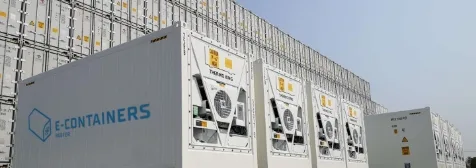 See our 20ft and 40ft refrigerated containers for sale.