Why Refrigerated Container Maintenance Matters

In international trade, refrigerated containers are an indispensable tool for transporting perishable products such as fruit, vegetables, meat, fish and pharmaceuticals.
These containers hold a suitable, constant temperature so the products reach their destination in perfect condition. For a reefer to work properly, however, proper and consistent maintenance is essential.
Below we explore why maintaining refrigerated containers matters, the factors to consider and the strategies that make it effective.
What are refrigerated containers?
Refrigerated containers, also known as reefers, are containers designed to transport perishable products that require a controlled temperature. They are equipped with a refrigeration system that keeps a constant temperature inside the container regardless of the weather outside. Reefers come in different sizes, the most common being 20-foot and 40-foot units.
They are used in international trade to move perishable goods, and the most common sizes are 20-foot and 40-foot refrigerated containers. Whatever the size, proper and consistent maintenance is essential to guarantee the quality of the products being transported and prevent damage. Good maintenance can also reduce transport costs, increase operational efficiency and keep you compliant with the applicable regulations.
Why maintaining refrigerated containers matters
Maintaining refrigerated containers is fundamental to guarantee the quality of the products transported and prevent damage. Proper maintenance can also lower transport costs, increase operational efficiency and ensure compliance with the applicable rules and regulations.
Ensuring the quality of the products transported
Refrigerated containers carry perishable products with a limited shelf life. It is therefore essential that the temperature inside the container stays constant so the products do not deteriorate. If the container temperature is not right, the products can suffer irreparable damage, which can mean significant financial losses for exporters and importers.
Preventing damage to the products
Besides holding the right temperature, constant maintenance is important to prevent damage to the goods. For example, if the container's refrigeration system is not working properly, moisture can build up inside and lead to mold and fungi on the products. Likewise, if the container is not cleaned properly, residue can remain and contaminate the products.
Lower transport costs
Proper maintenance of refrigerated containers can lower transport costs. If the refrigeration system runs efficiently, energy consumption falls and so does the electricity bill. And if the products arrive in perfect condition, the costs associated with returns, rejections and claims go down as well.
Greater operational efficiency
Proper maintenance of refrigerated containers can increase the operational efficiency of the companies that use them. If the containers are kept in good condition, supply chain interruptions caused by technical problems in transit are reduced. Periodic inspections and maintenance also let you detect and fix problems early, minimizing container downtime.
Compliance with regulations
Refrigerated containers must comply with certain regulations on temperature and cleanliness. In the United States, for example, containers must meet the standards set by the Occupational Safety and Health Administration (OSHA) and the Food and Drug Administration (FDA). Failing to comply can result in fines and financial penalties.
Factors to consider when maintaining refrigerated containers
To maintain refrigerated containers properly, keep several factors in mind: the right temperature and humidity, cleaning and disinfection, inspection of mechanical components, and operating tests and calibration.
The right temperature and humidity
Temperature and humidity inside the container are fundamental to guarantee the quality of the products. Make sure the refrigeration system works properly and that temperature and humidity stay within the recommended ranges for each type of product.
Cleaning and disinfection
Proper cleaning and disinfection of refrigerated containers is essential to prevent product contamination. Containers should be cleaned after every use and disinfected regularly. Pay special attention to the areas where moisture collects, since they are prone to mold and fungi.
Inspection of mechanical components
Inspect the container's mechanical components periodically, such as the compressor, fans, evaporator and condenser, to detect possible problems. Also check that there are no leaks in the refrigeration system, since a leak leads to refrigerant loss and system malfunction.
Operating tests and calibration
Run operating tests and calibrate the refrigeration system to make sure it works properly. That includes checking the accuracy of the thermostat and of the temperature and humidity sensors, and confirming that the refrigeration system switches on and off as it should.
Effective strategies for maintaining refrigerated containers
There are several effective strategies for proper reefer maintenance: preventive maintenance programs, data monitoring and logging, staff training, and teamwork and collaboration.
Preventive maintenance programs
Preventive maintenance programs consist of periodic inspections and servicing of refrigerated containers to detect and fix problems early. They include cleaning and disinfection, inspection of mechanical components, and operating tests and calibration, among other tasks. Implementing these programs can reduce container downtime and extend service life.
Data monitoring and logging
Monitoring and logging data from the container's refrigeration system can help detect potential problems before they turn into failures. That includes monitoring temperature and humidity inside the container, the refrigeration system's energy consumption and refrigerant levels. Keep a detailed record of all maintenance and repairs carried out on the container.
Staff training
The staff in charge of maintaining refrigerated containers must be trained and have technical knowledge of the refrigeration system and the mechanical components. They should also be aware of the applicable regulations to ensure compliance.
Teamwork and collaboration
Maintaining refrigerated containers takes a joint effort from different areas of the company. Encourage teamwork and collaboration between maintenance staff, container operators and transport staff to make sure the containers are in optimal condition throughout the whole process.
Conclusions
As we have seen throughout this article, proper maintenance of refrigerated containers is fundamental to guarantee the quality of the products transported, prevent damage, lower transport costs, increase operational efficiency and comply with the applicable regulations.
For proper maintenance, consider factors such as the right temperature and humidity, cleaning and disinfection, inspection of mechanical components, and operating tests and calibration. There are also effective strategies such as preventive maintenance programs, data monitoring and logging, staff training, and teamwork and collaboration. It is the responsibility of every company that uses refrigerated containers to keep them in optimal condition to guarantee the success of its operations.
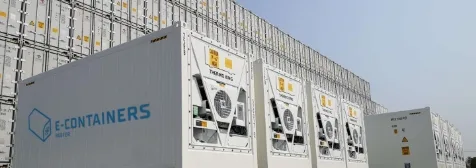 Discover our refrigerated containers, inspected and ready to work.