International Freight Transport Regulations

International freight transport is governed by two layers of rules that operate at the same time. The first is the multilateral conventions that set safety and liability conditions by mode of transport: SOLAS and MARPOL at sea, the Montreal Convention and ICAO rules in the air, and agreements such as ADR and CMR on the road. The second is each country's customs legislation, which decides which documents must be filed and when. In Colombia, where Econtainers is headquartered, that second layer is Decree 1165 of 2019 and its regulation by the DIAN, the national customs authority; we use it here as a worked example.
Understanding where each requirement comes from avoids the most common mistake of a first-time exporter: believing that complying with the shipping line is the same as complying with customs. They are different controls, with different parties responsible.
Who regulates international freight transport
There is no single authority. Regulation is split among specialized bodies by mode of transport and by trade matter:
- International Maritime Organization (IMO): the United Nations agency responsible for maritime safety and the prevention of pollution from ships. SOLAS, MARPOL and the IMDG Code fall under it.
- International Civil Aviation Organization (ICAO): sets the standards for air transport, including those for dangerous goods.
- International Air Transport Association (IATA): not a state body but the airlines' association; its operational and cargo regulations apply contractually across the whole air chain.
- World Trade Organization (WTO): the framework for trade rules between member countries, including the Trade Facilitation Agreement.
- World Customs Organization (WCO): administers the Harmonized System for describing and coding goods, the basis of tariff classification.
- Andean Community (CAN): regulates international road and multimodal transport between Colombia, Ecuador, Peru and Bolivia.
Conventions that govern ocean transport
The SOLAS Convention (Safety of Life at Sea) sets requirements for the construction, equipment and operation of ships. For anyone exporting in containers, its most direct requirement is the verification of the gross mass of the packed container, known as VGM: since July 1, 2016, SOLAS chapter VI, part A, regulation 2 requires every packed container to have a verified gross mass declared by the shipper before it is stowed on board. Without a VGM, the terminal simply will not load the unit.
The MARPOL Convention regulates the prevention of pollution from ships. Its Annex VI cut the global sulfur limit for marine fuel to 0.50% from January 1, 2020, down from the previous 3.50%, and keeps a 0.10% limit in designated emission control areas. That change was passed on to rates through fuel surcharges and explains much of the freight volatility since then.
Added to these is the IMDG Code, which classifies, packages, marks and segregates dangerous goods carried by sea. If your cargo falls into any of the nine hazard classes, the corresponding declaration is mandatory, and omitting it is grounds for rejection at the port.
Air transport rules
The Montreal Convention of 1999 unified the rules on the liability of international air carriers for damage, loss or delay of cargo and largely replaced the old Warsaw system. It is the framework that determines how far the airline is liable when a shipment is lost.
On dangerous goods, ICAO publishes the Technical Instructions and IATA translates them into its operational regulations. The practical consequence is that the list of items prohibited and restricted in the air is much stricter than at sea: lithium batteries, aerosols, flammable liquids and magnetized material have specific conditions or are excluded outright.
Road transport: ADR, CMR and the Andean decisions
The ADR Agreement regulates the carriage of dangerous goods by road and the CMR Convention sets the conditions and liabilities of the contract for international carriage of goods by road. Both were born within the United Nations Economic Commission for Europe, and their direct application is European, not American. It is worth saying clearly, because many articles present them as if they governed every road operation in the world.
In the Andean region the framework is different. Decision 837 of the Andean Community, in force since October 26, 2019, replaced Decision 399 and regulates the international carriage of goods by road between member countries, including customs aspects and the International Cargo Manifest. Within Colombia, the handling and road transport of dangerous goods is regulated by Decree 1609 of 2002 of the Ministry of Transport, which imposes requirements on the shipper, the carrier, the driver and the vehicle owner.
Which rule applies by mode
| Mode | Safety and operation | Contractual liability | Dangerous goods |
|---|---|---|---|
| Ocean | SOLAS, MARPOL (IMO) | Hague-Visby or Hamburg Rules, depending on the contract | IMDG Code |
| Air | ICAO annexes and standards | Montreal Convention of 1999 | ICAO Technical Instructions and IATA regulations |
| Road (Europe) | UNECE regulations | CMR Convention | ADR Agreement |
| Road (Andean Community) | CAN Decision 837 | CAN Decision 837 | Decree 1609 of 2002 in Colombia |
How these rules apply in Colombia: a worked example
National customs control sits on top of that international base. Colombia's customs regime is contained in Decree 1165 of 2019, in force since August 2, 2019 and amended several times, including by Decree 360 of 2021 and Decree 659 of 2024. Its general regulation is DIAN Resolution 046 of 2019.
The export process begins with the Shipping Authorization Request (SAE), regulated in articles 348 to 363 of Decree 1165 of 2019 and in articles 373 onward of Resolution 046 of 2019. Once shipment is authorized, the goods are loaded and the carrier certifies the loading, the declarant files the export declaration in the form the DIAN establishes.
These are the steps no exporter can skip:
- Keep the tax registration (RUT) up to date with the DIAN, with exporter status. The RUT absorbed the former National Exporters Registry.
- Classify the goods correctly under the tariff and check whether they need approvals from agencies such as the ICA, Invima or ANLA, processed through the Single Window for Foreign Trade (VUCE).
- File the SAE with the customs office that has jurisdiction over the place where the goods are located.
- Submit the cargo to inspection when the selectivity system calls for it, and manage entry into the primary customs zone.
- Keep the supporting documents for the legal term, because they are your defense against any later requirement.
Most exporters do not do this alone: they hire a customs agency, which acts under a customs mandate, and an international logistics operator that coordinates transport and travel documentation. Every country has its own equivalent of these steps and agencies.
Colombian ports, where the control becomes real
All of this regulation becomes tangible in the primary customs zone. According to the port traffic bulletin of Colombia's Superintendency of Transport, in 2025 the country's port zones handled 174.17 million tons of cargo, 2.3% less than in 2024, and 6,227,205 containers, 17.2% more than the year before. The Cartagena port zone led with 51.32 million tons, 29.5% of the national total.
- Cartagena: the main hub for containerized cargo and transshipment on Colombia's Caribbean coast.
- Buenaventura: the gateway to the Pacific and to Asian routes; it concentrates most of the west coast's traffic.
- Santa Marta: natural deep draft and a strong bulk and coal profile, with growing container operations.
- Barranquilla: a river-sea port on the Magdalena, useful for project and general cargo.
Choosing the port is not just a matter of freight: it changes the competent customs office, inspection times and equipment availability. If your cargo requires refrigerated containers, power connections in the yard and the frequency of shipping lines weigh as much as the rate.
What to check before dispatching
- That the tariff classification is confirmed and the approvals are valid at the time of shipment.
- That the VGM is declared and transmitted within the deadline set by the shipping line.
- That the description of the goods is identical on the invoice, the transport document and the customs declaration. Inconsistencies between documents are the most frequent cause of seizures.
- That the container is in seaworthy condition, with high-security seals properly recorded.
- That cargo insurance covers the entire journey and not just the ocean leg.
Frequently asked questions
Which rule governs international freight transport in Colombia?
On customs matters, Decree 1165 of 2019 and DIAN Resolution 046 of 2019, with the later amendments of Decree 360 of 2021 and Decree 659 of 2024. On transport safety and liability, the international conventions for each mode also apply.
Does the CMR Convention apply in Colombia?
No. CMR and ADR are instruments of European origin. Road transport between Andean countries is governed by Decision 837 of the Andean Community, and within Colombia by Decree 1609 of 2002 for dangerous goods.
What is the VGM and who must declare it?
It is the verified gross mass of the packed container, required by SOLAS since July 1, 2016. The obligation to declare it falls on the shipper named in the transport document, not on the shipping line or the terminal.
Do I need a customs agency to export?
It depends on the value and the type of operation. The regulations define when a customs agency's involvement is mandatory and when the exporter can act directly. Check your specific case on the DIAN portal before assuming either route.
Where can I check the current version of the customs rules?
In the DIAN's legal compendium, which publishes the consolidated text of Decree 1165 of 2019 with its amendments. It is the only source that reflects the current state of each article.
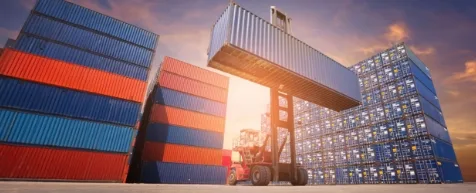 Ship compliant: see our cargo-worthy shipping containers, ready for international transport.