How Are Shipping Containers Made?

Shipping containers, or simply containers, have been in use since World War II, when highly resistant materials were needed to transport military supplies to the different fronts of the conflict.
The original idea for the container came from Malcolm McLean, an American trucker born in 1913 into a middle-class family in North Carolina.
His idea took shape in the ports of the East Coast of the United States around 1956, and about a decade later its use had spread all over the world.
Materials containers are made of
Steel is the material of choice for building them; however, there are also aluminum containers. Today there is a wide variety of containers, so that the transport of goods around the world can be carried out efficiently and, above all, making the most of resources.
How are they built?
They are made from 8 x 3 ft sheets, about 2.43 x 0.91 m. Each sheet is prepared for manufacturing by passing through sandblasting, flattening and stamping machines. The sheets then move to a press that corrugates the steel, a process that adds strength to the panels.
After that first process, the sheets are welded to form wall panels. Between 7 and 14 sheets are needed to form one wall of a shipping container, whose length ranges from 20 to 40 ft, that is, between 6 and 12 m.
To give the container walls rigidity, the corrugated panels are reinforced with long steel beams.
Types of containers
These are some of the container types you will find:
- Flat rack containers: ideal for transporting heavy goods or loads. They are designed with dimensions suited to special cargo such as pipes or machinery. They are made of steel and range from 20 to 40 ft.
- Standard container: the most common sizes are 20 and 40 ft, and they are widely used to transport all kinds of cargo.
- Dry container: made up of a metal structure and hermetically closed. It is used to transport dry cargo, meaning it is designed to carry machinery, furniture and the like.
- Tank container: recognizable because its structure is a tank for transporting any kind of bulk liquid, such as oils, beer and toxic chemicals.
Beyond these, there are containers fitted with garment hangers, ventilated containers for shipping coffee, dedicated bulk cargo containers, live seafood containers and storage containers for equipment when there is no room for it elsewhere.
The manufacture of these storage tools must meet certain requirements that guarantee their quality so they can be used to transport products.
Ocean trade is very important around the world, so correct storage and the right choice of container can mean significant savings in time, space and money for a business.
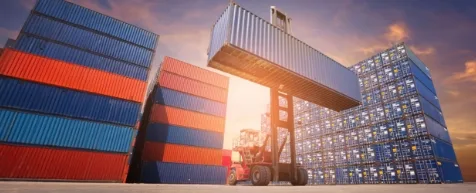 New and used steel containers, 20 ft and 40 ft. See our shipping containers.