Cold Rooms: How They Work and What Types Exist
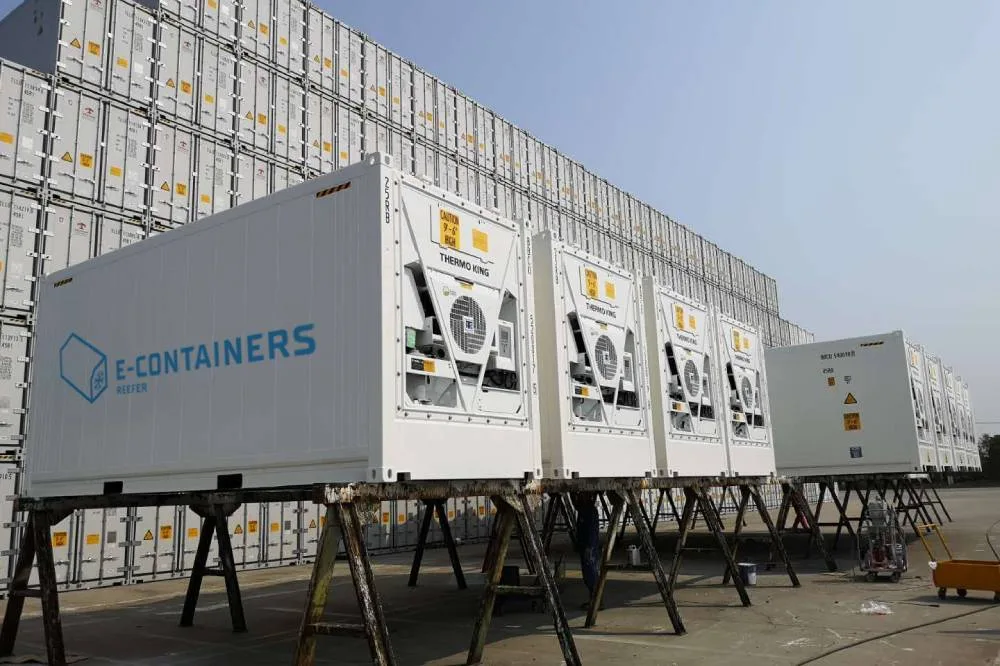
A cold room is an insulated enclosure that removes heat from its interior through a vapor-compression refrigeration cycle, to keep goods within a defined temperature and humidity range. The main types are classified by temperature range (chilled storage, freezer, blast freezer and controlled atmosphere) and by construction (built-in, modular knock-down and mobile, such as a refrigerated container).
This article explains how they work and how they are classified. If what you need is the step-by-step to build one, see the guide on
What is a cold room
Also called a cold store, cold chamber or walk-in cooler, it is an enclosed space with thermal insulation and a refrigeration system that holds stable interior conditions regardless of the outside climate. Its purpose is to slow down the processes that spoil goods: the respiration of fruit and vegetables, microbial growth, enzymatic reactions and water loss.
Cold rooms are central to the export of flowers, bananas, avocados and seafood, and to the distribution chains of meat, dairy, vaccines and medicines. The difference between an industrial cold room and a domestic unit is not just size: it lies in refrigeration capacity, humidity control, forced air circulation and documented temperature traceability.
How cold rooms work
Cold is not produced; heat is removed. Practically every industrial cold room runs on a four-stage vapor-compression cycle, in which a refrigerant circulates in a closed circuit changing state:
- Compressor: draws in the refrigerant as low-pressure vapor and compresses it, raising its pressure and temperature.
- Condenser: located outside, it releases the heat carried by the refrigerant to the environment; the refrigerant condenses into a liquid.
- Expansion device (expansion valve or capillary tube): sharply reduces the pressure of the liquid, which lowers its evaporation temperature.
- Evaporator: inside the room, the refrigerant evaporates while absorbing heat from the interior air, which the fans circulate over the product. The vapor returns to the compressor and the cycle repeats.
Around that cycle there are three elements that determine whether the room actually performs well:
- Control: a thermostat or electronic controller compares the measured temperature with the set point and starts or stops the equipment. In demanding installations, temperature and humidity are logged continuously, with alarms.
- Defrost: in cold rooms the moisture in the air freezes on the evaporator and blocks it. That is why the system runs scheduled defrost cycles, and that water must drain through a freeze-protected drain.
- Insulation and airtightness: insulated walls, ceiling and floor, with a continuous vapor barrier and seals in good condition. Without that, the equipment works permanently against incoming heat and consumption soars.
Air circulation deserves a separate mention. If pallets are pushed against the walls or the evaporator return is blocked, pockets form where the air does not reach and the temperature rises several degrees above what the display shows. That is why food safety regulations require storing goods in an orderly way, on pallets and away from the floor and walls.
Types of cold rooms by temperature range
Chilled storage room
Operates at positive temperatures, roughly in the 0 to 15 °C (32 to 59 °F) range depending on the product. It is the room for fruit, vegetables, dairy, fresh meat, flowers and beverages. The product keeps its natural state: it is not frozen, only its metabolism slows down, so shelf life is measured in days or weeks.
Here relative humidity is as important as temperature, because air that is too dry dehydrates the product and makes it lose weight and appearance.
Freezer room
Keeps already-frozen product at negative temperatures. The usual regulatory reference is clear: frozen storage must be at -18 °C (0 °F) or below. It is the room for meat, seafood, ice cream and frozen processed foods, with a shelf life of months.
It requires more insulation, doors with perimeter heaters so the packaging does not freeze shut, and special attention to floor insulation to keep the ground under the slab from freezing and heaving.
Blast freezer
Not a storage room but a process room: its job is to bring the product's temperature down quickly, not to hold it. It works at much lower temperatures, around -30 to -40 °C (-22 to -40 °F), with high air velocity.
The technical reason for fast freezing is quality: the faster the product crosses the critical ice-formation zone, the smaller the crystals and the less damage they cause to the cell structure. A slowly frozen product loses texture and releases liquid when thawed. The blast freezer freezes, and the product then moves to the freezer room for storage.
Controlled atmosphere room
Besides temperature and humidity, it regulates the composition of the air: it lowers oxygen and adjusts carbon dioxide and ethylene. With less oxygen available, the fruit's respiration slows down and ripening is significantly delayed, without chemicals.
This is the technology that makes it possible to keep fruit for months out of season, and the one used on long ocean voyages of sensitive products. It is the most expensive option and the one that demands the most technical control, because a poorly regulated atmosphere suffocates the product and causes physiological damage. There are also versions of this technology built into shipping containers.
Types by construction
Built-in cold room
Built on site as part of a building, with civil works, an insulated envelope and equipment sized to measure. It allows any geometry, tall clearances, racking systems and internal process flows with staff and forklift traffic. It is the option for processing plants, distribution centers and large-volume cold stores.
Its downside is obvious: high investment, long lead time and zero mobility. Where it is built, it stays.
Modular or knock-down cold room
Assembled from prefabricated sandwich panels joined with cam locks and tongue-and-groove edges on a level base. The walls can be taken down and reassembled elsewhere, and the room can be enlarged by adding panels.
It is the most common middle-ground solution: short assembly time, lower cost than construction and the ability to grow with the business. Its limit lies in the dimensions and heights the panel system allows, and in still needing a site with an adequate electrical supply.
Mobile cold room: the refrigerated container
A reefer container is a certified, self-contained, transportable cold room, with its refrigeration unit built in, factory insulation, a T-bar floor for air circulation and temperature logging. It arrives ready to operate: all it needs is a level surface and a three-phase power supply, or a generator where there is none.
It covers both static storage and transport, and that is its distinctive advantage: the same unit that stores the cargo can carry it to the port or to the customer without breaking the cold chain or transferring the product.
| Type | Start-up | Mobility | Scalability | Typical use |
|---|---|---|---|---|
| Built-in | Long | None | Requires new construction | Plants and distribution centers |
| Modular knock-down | Medium | Relocatable after disassembly | Expands with panels | Retail, food service, mid-size agribusiness |
| Refrigerated container | Short | Total, with standard transport | Units are added or removed | Harvest peaks, export, job sites and remote locations |
Which one suits your goods
The choice comes down to three questions: what temperature range the product requires, how long it must stay in storage and whether the location is permanent.
- Fresh fruit and vegetables: chilled storage with humidity control. The range depends on the product; export bananas, for example, are handled at around 12 to 14 °C (54 to 57 °F), and Hass avocados in a range close to 5 to 7 °C (41 to 45 °F). Every product has its protocol, and you must follow the technical sheet and the buyer's requirements.
- Cut flowers: chilled storage at low positive temperatures with high humidity and immediate pre-cooling after harvest; the time between cutting and cooling is decisive for vase life.
- Frozen meat and seafood: freezer room at -18 °C (0 °F) or below, preceded by a blast freezer if the product is frozen at the plant.
- Fruit for long voyages or off-season sale: controlled atmosphere.
- Medicines and biologicals: rooms with dual systems, continuous logging, alarms and backup power, because the requirement is not only to hold the range but to be able to prove it.
On time and location: if the need is seasonal, urgent or at a site that may change, the refrigerated container almost always wins. If the volume is high and stable and the process needs interior working space, a built room is justified. If you are not sure about your case, tell us about your operation or browse our refrigerated containers.
Frequently asked questions
What is the difference between a cold room and a freezer room?
A chilled cold room works at positive temperatures and keeps the product fresh without changing its state; a freezer room works at negative temperatures, typically -18 °C (0 °F) or below. The insulation, equipment, doors and floor treatment all change.
What capacity does a cold room have?
There is no standard capacity: it ranges from rooms of a few cubic meters to cold stores with thousands of pallet positions. What defines usable capacity is not gross volume but how much is left after subtracting aisles, wall clearances and the free space under the evaporator.
Does a reefer container replace a cold room?
For storage, yes, as long as the volume and dimensions fit the container and there is a power supply or generator. It does not replace one when the process requires interior working space, tall racking or particular geometries.
How much energy does a cold room use?
It depends on the temperature range, the insulation, the site's climate, the number of door openings and the maintenance condition of the equipment, so there is no general figure. What is constant is that poor insulation, worn seals and dirty condensers are the three most frequent causes of excess consumption.
What regulations apply to cold storage of food?
Each country has its own food safety rules. In Colombia, for example, Resolution 2674 of 2013 of the Ministry of Health requires temperature and humidity control, periodic verification of the accuracy of logging devices and orderly storage on pallets away from the floor and walls. Check the requirements of your local food safety authority.
You may also be interested in:
 A cold room that arrives ready to run: see our 20ft and 40ft refrigerated containers.