How to Inspect a Refrigerated Container

Inspecting a refrigerated container before loading means going through six areas in order: documents and CSC plate, external structure, doors and seals, interior and T-floor, evaporator and drains, and controller with temperature log. The full check takes 20 to 40 minutes and is the only real chance to catch a problem while the unit can still be swapped. Once the cargo is inside and the container sealed, any finding turns into a claim.
Before climbing in: the CSC plate
The CSC plate (Convention for Safe Containers) is usually riveted to the left door and is the first thing to check, because without it the container cannot be used in international transport. It shows:
- The legend CSC Safety Approval, the country that granted the approval and the approval reference.
- Date of manufacture (month and year) and the manufacturer's identification number.
- Maximum gross weight, allowable stacking load and transverse racking test load.
- The examination regime the unit is subject to.
That last point is the one most often overlooked. Under the periodic examination scheme (PES), the container must be examined no later than five years after manufacture and then at intervals of no more than 30 months, and the next examination date (NED) must be marked on the plate. Under an approved continuous examination program (ACEP), the plate shows the ACEP designation, the country that granted it, the year and the registration number, and carries no expiry date. If the plate is illegible, torn off or the NED has passed, the unit is not loaded: it goes back to the depot.
Along with the plate, the container number is checked against the assignment document and the most recent
How often it is inspected
There are four different moments, and it is best not to confuse them:
- Before every loading. Full visual inspection by the exporter or its logistics operator. This is the one described in this article, and it is not negotiable.
- On handing over and receiving the equipment (on-hire and off-hire). The condition of the container is recorded to define responsibility for damage.
- PTI at the depot. Functional test of the cooling unit run before assigning the container to a perishable cargo. The validity each shipping line or depot accepts is defined by its own procedure.
- CSC structural examination. The PES or ACEP regime shown on the plate, the responsibility of the equipment owner.
Inspection checklist
1. External structure
Walk the four sides and the roof looking for deep dents, punctures, perforating corrosion and broken welds. Check the corner castings and the cross members of the bottom frame, where the structural stress concentrates. On the roof, look against the light from below with the container closed: a point of light is a hole, and a hole in a reefer lets warm air and moisture into the insulation.
2. Doors and seals
This is the point that fails most often and causes the most losses. Check that the locking bars turn without forcing, that the cams and pins are complete and tight, and that the hinges have no play. The rubber gaskets must be continuous, flexible and free of cuts or crushed sections. The classic test: with the door closed, slide a sheet of paper around the perimeter; if it comes out without resistance, the seal is not doing its job.
3. Interior and T-floor
A reefer floor is not flat: it is made of aluminum T-profiles whose channels are the path cold air takes to reach the far end of the container. Check that the channels are clean and clear, with no residue from previous cargo, no profiles bent or crushed by a forklift, and with the end grille free.
Inside, also check the corrugated walls (not deformed inward), the red maximum load line painted at the height of the return air, the absence of odors and damp stains, and the condition of the lighting if the unit has it.
4. Evaporator and drains
The evaporator sits on the front wall. Check that the fins are not bent or blocked by debris or ice, that the fans spin freely without abnormal noise, and that the condensate drains are clear. A blocked drain leads to water build-up, ice and odors. If the unit has a ventilation (fresh air exchange) vent, confirm it opens and closes and leave it in the position the product requires.
5. Controller and temperature log
Power up the unit and confirm the setpoint matches the one agreed for the cargo, not the one from a previous trip. Check that there are no active alarms or pending fault codes, that the supply and return air readings are consistent with each other, and that the data recorder is active with memory available. If you are going to use your own dataloggers inside the cargo, this is the moment to place them and note their position.
6. Power supply
Check the condition of the cable and plug, that there are no exposed conductors or burnt connectors, and that the outlet available at origin matches the voltage and frequency of the unit. If the road leg has no outlet, confirm the attached generator and its fuel level.
Visual inspection and PTI are not the same thing
The visual inspection verifies the physical condition of the container: structure, seals, floor, cleanliness. The PTI is a functional test of the refrigeration unit run at the depot with the container empty, evaluating the performance of the compressor, fans and sensors and the temperature pull-down. A container can pass the PTI and still be no good for your cargo if the floor is broken or a door gasket is cut. That is why the two checks are complementary and neither replaces the other. If you want to understand exactly what that test measures, we detail it in
Frequently asked questions
What do I do if I find a defect during the inspection?
Document it with photos and the container number, and report it to the line or the depot before loading. A defect reported before loading means a change of equipment; the same defect reported afterwards is an argument about responsibility.
What does it mean if the CSC plate has expired?
That the container has no valid structural examination and cannot be used in international transport until the corresponding inspection is carried out and the marking updated.
Who should do the inspection before loading?
The party responsible for the cargo: the exporter or the logistics operator acting on its behalf. Accepting a container without checking it amounts to accepting its condition as is.
How do I know the cooling unit is working properly?
By the consistency between supply and return temperature, the absence of alarms and the PTI report. To understand what is happening behind those readings, see
Do I also need to inspect on unloading?
Yes. At destination, the integrity of the seal is verified, the temperature log of the trip is downloaded and the condition of the floor and doors is checked before returning the unit, to leave a record of the condition in which it is handed back.
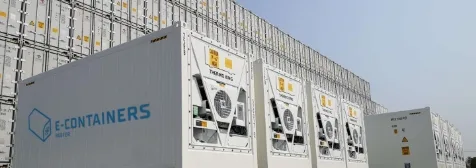 Inspected, graded reefers ready for your cargo. See our refrigerated containers.