How a Refrigerated Container (Reefer) Works
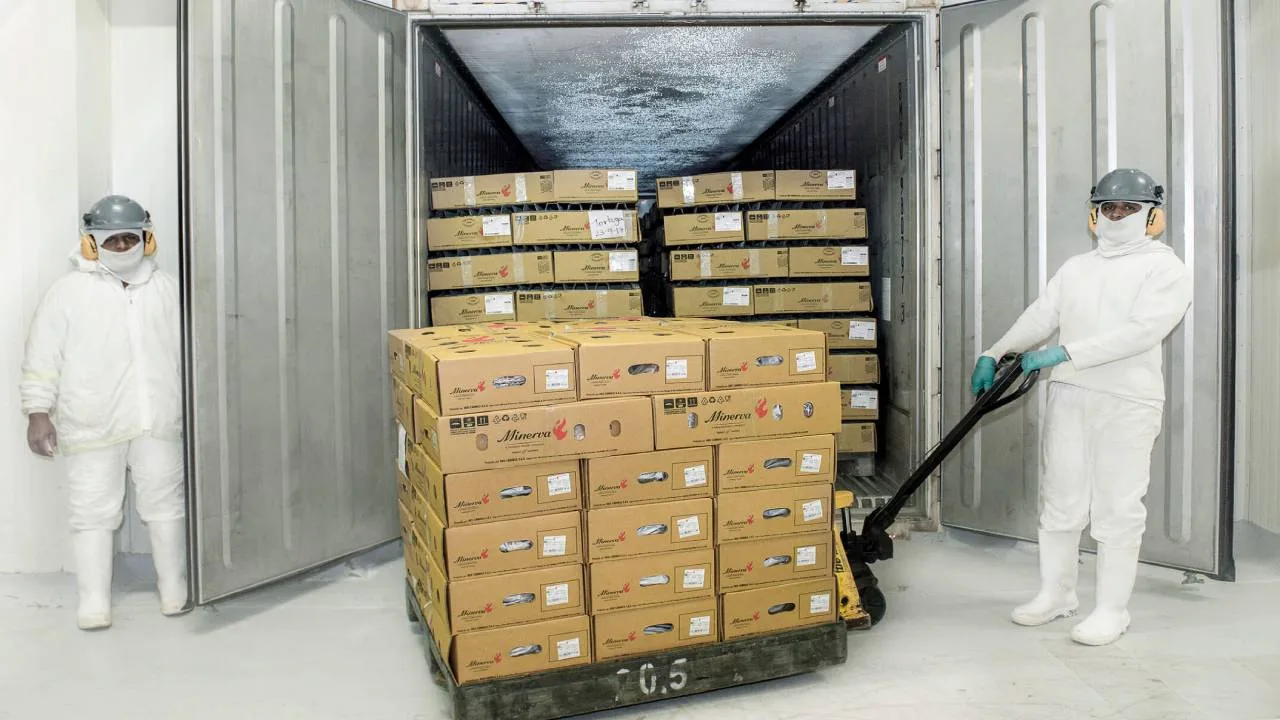
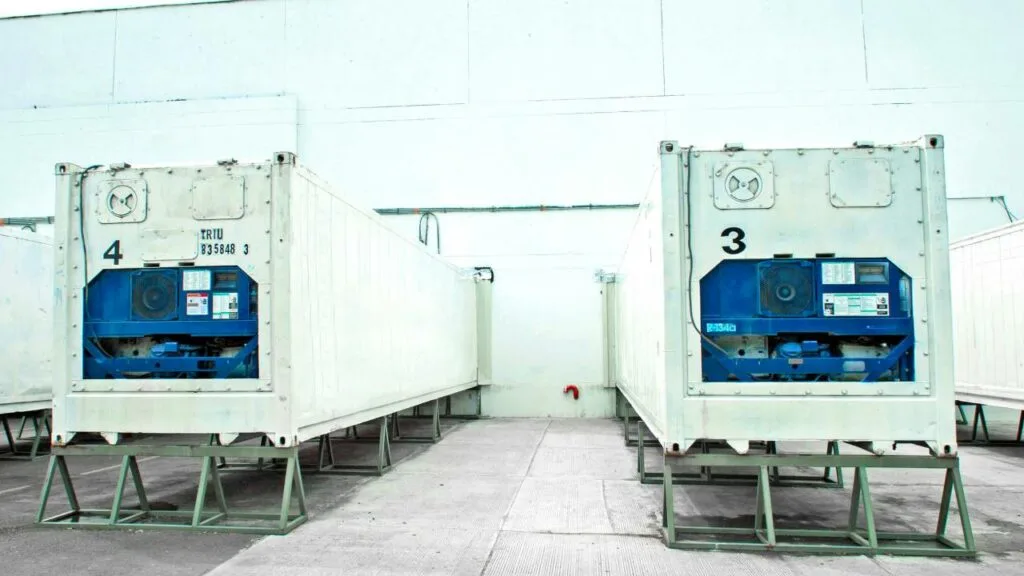
A refrigerated container, or reefer, works like a self-contained industrial refrigerator: a compression refrigeration unit removes heat from the interior, expels it to the outside and returns cold air, which is distributed under the cargo through a grooved T-shaped floor. It does not cool the goods from scratch; it maintains the temperature at which the cargo was loaded, within a range of roughly -30 °C to +30 °C (-22 °F to 86 °F).
That distinction between cooling and maintaining explains most cold chain problems: if the product is loaded warm, the unit cannot correct it.
The refrigeration cycle, step by step
The heart of the reefer is a closed circuit through which a refrigerant gas circulates, usually R-134a or R-404A depending on the manufacturer. The cycle has four stages:
- Compressor. It draws in the refrigerant as a low-pressure gas and compresses it. Compression raises its pressure and its temperature. This is the component that consumes most of the unit's energy.
- Condenser. The hot gas passes through a heat exchanger exposed to the outside air. There it gives up heat to the environment and condenses from gas to liquid. This is the point where the heat that was inside the container finally leaves.
- Expansion valve. The liquid passes through a restriction that makes its pressure drop sharply. With that pressure drop, the refrigerant cools dramatically.
- Evaporator. The cold refrigerant runs through another heat exchanger, this time inside the container. Fans push the air in the box against that coil: the air gives up its heat, the refrigerant evaporates and returns to the compressor. The cycle starts again.
The system does not produce cold: it moves heat from the inside to the outside, over and over, until the set temperature stabilizes. That is why a reefer performs worse in direct sun or with a dirty condenser: if it cannot release heat outside, it cannot remove it inside either.
How air circulates inside the container
Air distribution is as decisive as the machine. The internal circuit works like this:
- Injection through the floor. Cold air leaves the evaporator toward the bottom of the container and enters the T-floor, a grid of T-shaped channels that runs the full length of the box. That design forces the air to pass under the cargo along its entire length.
- Baffle plate. Located at the far end, it redirects the flow and prevents the air from taking shortcuts.
- Rise through the cargo. The air rises between the pallets, absorbing the heat of the product and, in the case of fruit, the heat of respiration.
- Top return. A grille at the top of the front collects the warmed air and returns it to the evaporator.
- Red load line. It marks the maximum loading height. If it is exceeded, the return is blocked, the unit reads a false temperature and the product at the back warms up without the machine detecting it.
- Fresh air ventilation. An adjustable vent brings in outside air to evacuate the carbon dioxide and ethylene that fruit releases as it ripens. With frozen cargo it is kept closed.
- Condensate drains. They evacuate the water that forms in the evaporator. They are opened for chilled cargo and closed for frozen.
The controller and the set point
The set point, the target temperature, is programmed on the front panel. The controller reads two values: the supply air temperature, leaving the evaporator, and the return air temperature, coming back from the cargo.
With chilled cargo, the unit regulates on the supply air, because the product is sensitive and cannot receive air below its freezing point. With frozen cargo it regulates on the return air, since what matters is that the whole mass stays cold. Current units hold tolerances of about ±0.25 °C (±0.45 °F) in chilled mode and ±1 °C (±1.8 °F) in frozen mode.
The controller also manages defrost cycles, records the temperature curve so it can be downloaded at the end of the trip and triggers alarms on deviations. In units with satellite monitoring, that data travels in real time.
Types and sizes available
Reefers come in 20 ft (about 28 m³ / 990 cu ft inside), 40 ft (about 59 m³ / 2,080 cu ft) and 40 ft High Cube (about 66 m³ / 2,330 cu ft, with 2.50 m / 8.2 ft of interior height). Figures vary by manufacturer and model, even between units with the same external size.
By working range there are three families: chilled units for fresh product, freezer units between -18 °C and -25 °C (0 °F and -13 °F), and deep-freeze or super freezer units that reach -60 °C (-76 °F) and, in some models, -70 °C (-94 °F). Add to those the controlled-atmosphere units, which also regulate oxygen and carbon dioxide to delay fruit ripening. The details are in
How it is powered
A reefer needs continuous three-phase power at 380 to 460 V, 50/60 Hz. It can never be left unplugged for hours. On a real journey it changes power source several times:
- On the ship. It is plugged into the vessel's reefer sockets, and the crew monitors the units during the voyage.
- At the port. Major ports have reefer yards with dedicated sockets where the container stays powered while waiting to be loaded or picked up.
- In road transit. A genset generator is attached, either clipped to the front of the container or installed under the truck chassis. We explain it in
- At a plant or warehouse. With its own three-phase supply, the container works as a fixed cold room.
Coordinating those handovers without disconnection windows is a large part of the work in refrigerated cargo logistics.
What to check when contracting a refrigerated container
- Recent PTI. The pre-trip inspection verifies that the unit responds across its whole range. Request it in writing.
- Condition of the condenser and evaporator. Dirty coils or bent fins reduce capacity right when it is needed most.
- T-floor and baffle plate. Crushed channels or poor patches ruin air circulation.
- Door gaskets. They are the most common leak of cold and energy.
- Temperature log. Confirm whether the unit delivers a downloadable curve and whether it includes remote monitoring with alarms.
- Power plan. Define in advance who supplies power on each leg and whether a genset is needed.
- Response to failure. Ask about technical response time and whether a replacement unit is available.
The price depends on size, temperature range, length of use, location and whether you need a genset or monitoring. You can browse the available inventory or request a quote.
Why they matter in export operations
The reefer is the infrastructure that supports a large share of agricultural exports: bananas to Europe at 13.3 °C (56 °F), Hass avocado at 5 to 7 °C (41 to 45 °F), cut flowers at 1 to 2 °C (34 to 36 °F), plus meat, fish, dairy and pharmaceuticals. In healthcare, there are cargoes such as vaccines that simply cannot move without a controlled cold chain. The temperatures for each product are in
Frequently asked questions
Does a refrigerated container cool or only maintain?
It only maintains. It is sized to preserve the temperature of a cargo that arrives already pre-cooled or pre-frozen. Bringing down the temperature of warm product is the job of a cooling tunnel or a blast freezer, not of the reefer.
How much energy does a reefer container consume?
It varies a lot depending on the set point, ambient temperature, type of cargo and condition of the equipment. Consumption is noticeably higher in frozen mode and in hot climates. To size the power supply, always ask for the technical data sheet of the specific unit.
What happens if the container is unplugged in transit?
The insulation gives it a few hours of thermal inertia, more with frozen than with chilled cargo, but the temperature starts rising immediately. That is why long road transits are done with a genset and high-value units carry remote alarms.
Can a reefer be used as a fixed cold room?
Yes. With a suitable three-phase supply it works as a modular cold room, is installed in days and can be relocated. It is the usual alternative when building a cold room is not feasible for reasons of time or space.
How often does it need maintenance?
Besides the PTI before each trip, the unit requires periodic preventive maintenance: coil cleaning, refrigerant charge check, probe calibration and gasket inspection. In continuous storage operation, that plan is what prevents unexpected stops.
 See our 20ft and 40ft refrigerated containers, inspected and ready to run.